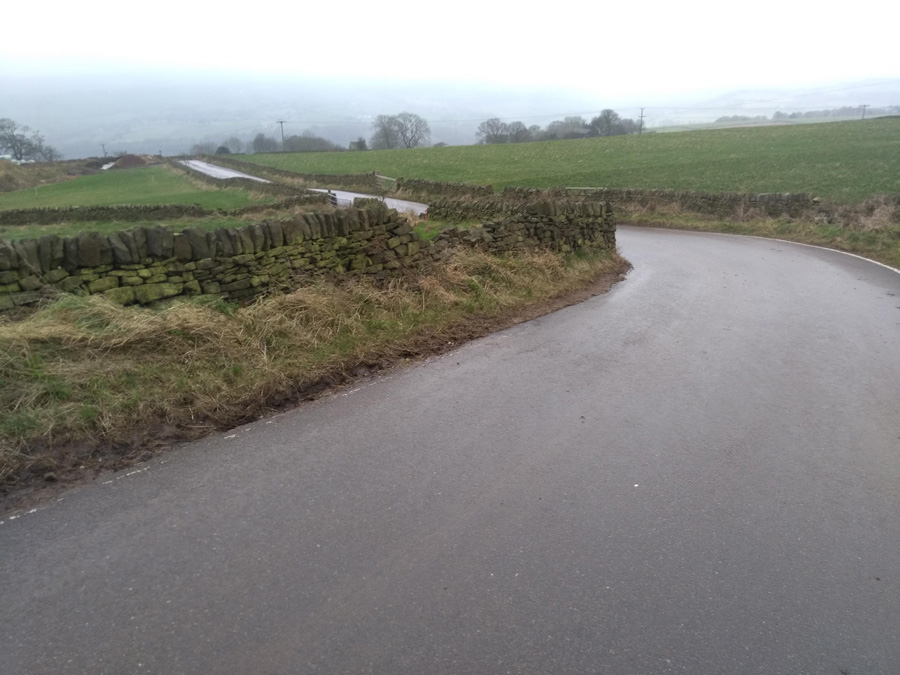
Tag: 3/5

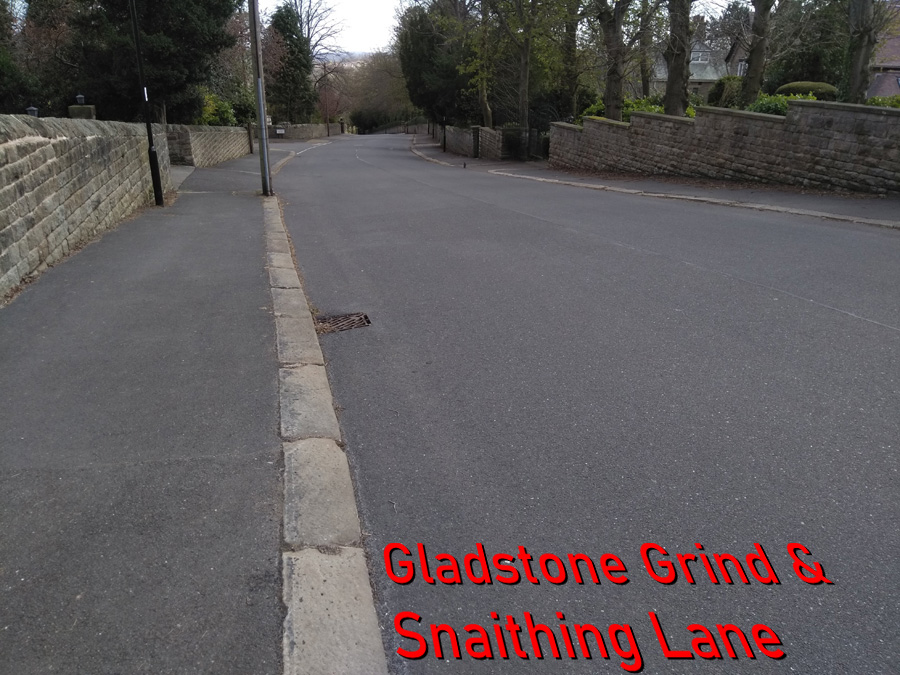
Gladstone Grind / Snaithing Lane

  • Gladstone Grind and Snaithing Lane
  • Length: 0.52 miles
  • Avg gradient: 8.7%   Peak gradient: 13.5%
  • Difficulty: 3/5
  • Likelihood of encountering unpleasant motor-vehicles: 2/5
  • Elevation gain: 241 ft
  • Strava

Starting and finishing in similar locations and running fairly parallel to each other, the Gladstone Grind / Snaithing Lane climb is similar to – but easier than – Tom Lane. They’re both suitable tasters for some of the hills in the Peak District that these roads lead you towards.
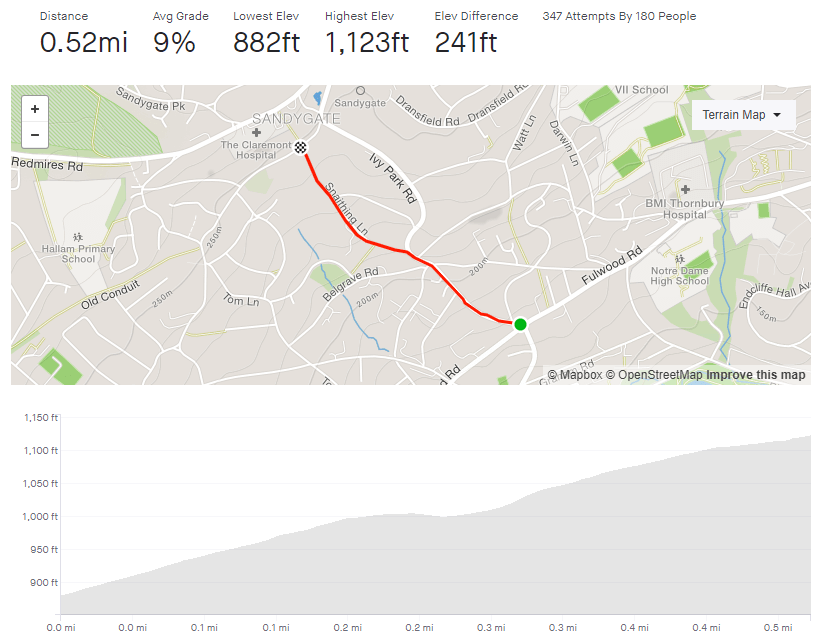
Begin at the crossroads with Fulwood Road (the segment could begin at the bottom of Hangingwater Road but I’ve never managed to reach this crossroads without the lights turning red) and the hill is straight into double figures, hovering around the 11% mark. It’s a tree-lined road with a broad right hand curve that seems to stretch on and on. If you’re lucky, the yappy dog at number seven will come charging down the driveway at you but he’s stuck behind a gate, so you can pedal on safely.
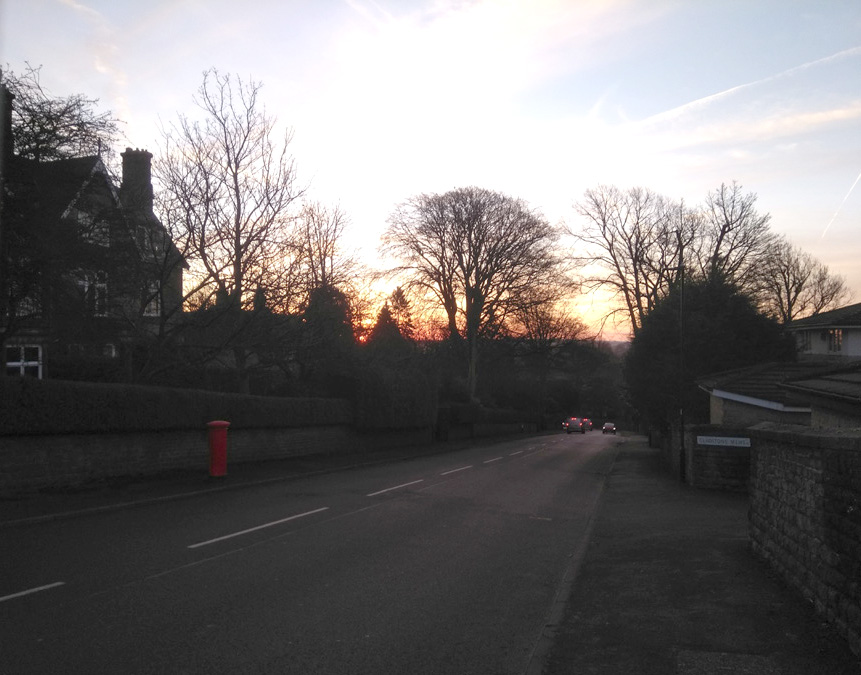
Shortly after the road straightens out, Graham Road joins from the left. It’s heads down here and grind on as I find that there is something about this section that feels a real slog. It’s probably as it’s just a straight 10% line, with just a postbox near the crest to aim for.

A short distance past the postbox, you’re gifted a very brief downhill as you swing left off Gladstone Road, onto Snaithing Lane. The 2020 Magnificent 7 race continued up Ivy Park Road at this point but I think Snaithing Lane is a more interesting challenge, so stick with that. The downhill respite is short lived however, as the road spikes up and bends to the right. As you pass the Kings Foundation, you’re on the steepest section of the hill at around 13.5%, but it does feel steeper.

You’ll soon pass a large white house with a fancy balcony, on your right. That’s the sign that you’re over the worst, and the road drops to a more manageable 7% for the final 0.1 mile. Once you’ve reached the top, if you fancy an additional silly little challenge, turn left, then take the first right up Carsick View Road. A cheeky little spike that was not quite close enough to include as part of this entry.
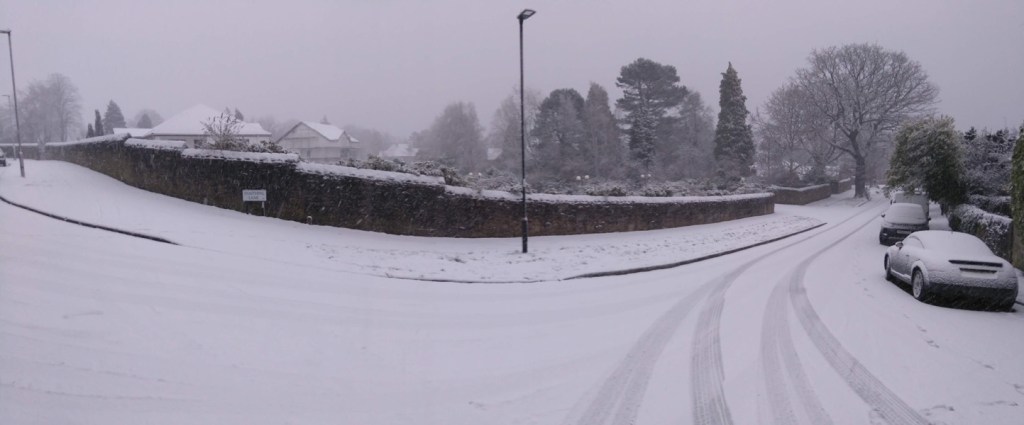
Rivelin Bank & Walkley Bank Road

  • Rivelin Bank & Walkley Bank Road
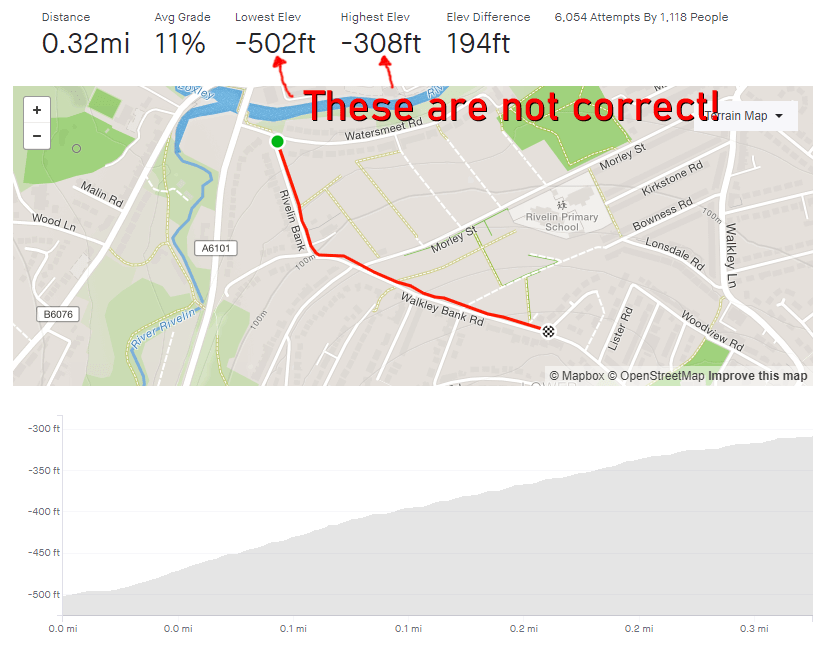
  • Length: 0.32 miles
  • Avg gradient: 11.3%   Peak gradient: 14.9%
  • Difficulty: 3/5
  • Likelihood of encountering unpleasant motor-vehicles: 2/5
  • Elevation gain: 194 ft
  • Strava

The first time I tackled this climb I didn’t really know where I was going and thought this might have been a more direct route home. I might have been correct about it being more direct but it certainly wasn’t flatter.

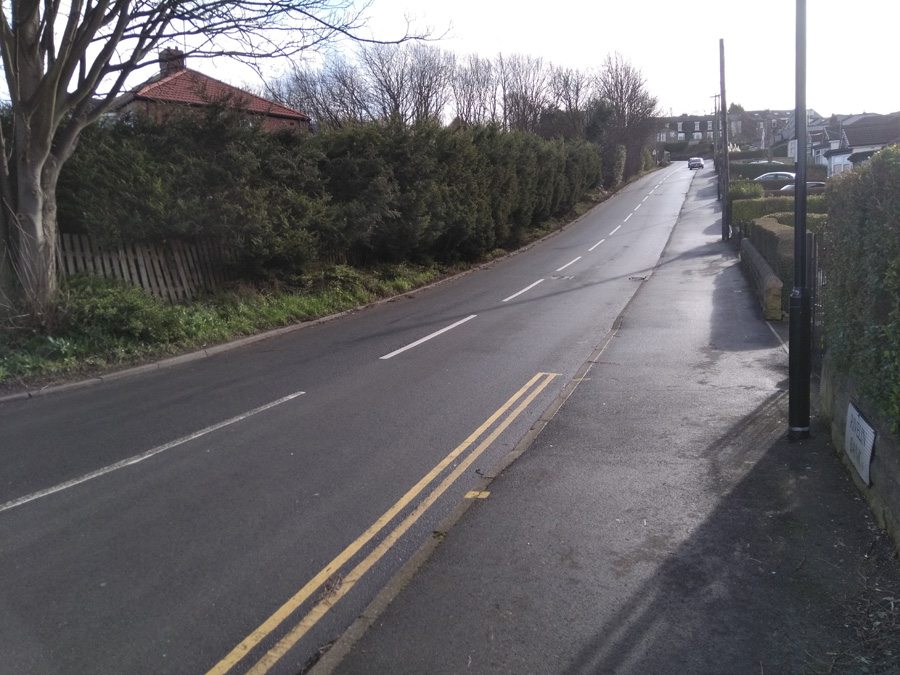
Rivelin Bank’s gradient is very quickly into double figures with an average of 13% until the bend to the left and the junction with Racker Way. It’s a dead straight section, so it’s all about putting your head down and grinding. The first time I did the hill and its steepness took me by surprise, I had to take a turn around an apartment’s parking lot about half way up, just to get my breath back without having to actually stop pedaling.

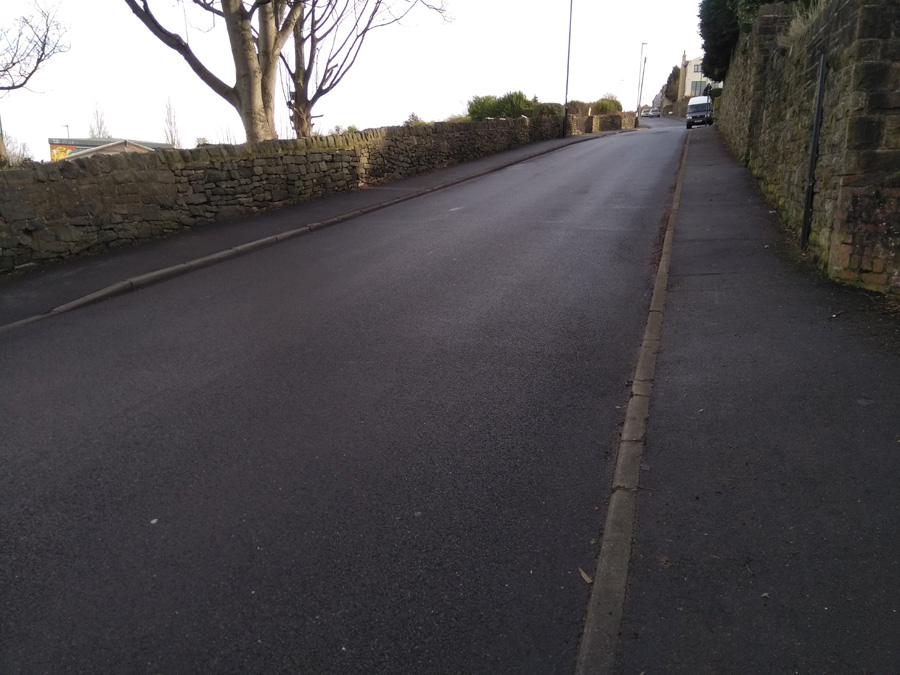
The approach to the bend is the steepest section and, once you’re around it, the gradient does ease off, dropping to around 10.5% for the second half of the climb. You’re now on Walkley Bank Road, with the allotments on your left and a high wall on your right. Once you pass the junction of Hawthorne Road the steepness begins to peter out, until you trundle to the apex at Walkley Bank Close.

This was by no means the end of my route home and, as you’ll find if you explore Walkley, by no means the only challenging hill in the area.

Loxley to Kirk Edge

  • Loxley to Kirk Edge
  • Length: 1 mile
  • Avg gradient: 10.4%   Peak gradient: 15.9%
  • Difficulty: 3/5
  • Likelihood of encountering unpleasant motor-vehicles: 1/5
  • Strava

I was introduced to this road, which featured in the 2017 Magnificent 7, when out with my pizza-and-beer cycling club. The usual ride leader wasn’t able to come so the ride was led by one of the riders who likes to do hill reps. He zoomed up here, the rest of us puffed and panted after him.

If you’re heading from the city, you’ll have probably already climbed almost 250ft up Loxley Road before you reach West Lane and the start of this hill. That’s not too much of challenge but it is a bit of a slog, so make sure you’re not blitzing it up there and not leaving enough in the tank for this climb.

Turning right, on to West Lane, you’re immediately on a 10-11% gradient for the first, dead-straight, 0.3 miles. Just dig in here as the road will eventually get a bit more interesting. Soon enough, you’ll reach the first bend, with a farmhouse on the left, and the one of the the climb’s steepest sections, at 15.9%, shortly after. At the halfway mark, as Meyers Lane joins from the right, the gradient reduces for a short distance before ramping right up again as you pass Green End Farm, and on into the hamlet of Holdsworth.

The road wiggles through farmhouses, barns, and the sounds and smells of the countryside and you’ll soon have fields on either side.  With 0.2 miles to go, the road has a bend to the right, then a straight section with an incline of around 7% (my three sources all disagree about the exact figure), followed by this climb’s sting-in-the-tail: a little dog-leg of about 15.9%, the end of which is marked by a telegraph pole.

Once you reach the pole, pootle to the end of the road and turn left towards Bradfield or right for an extremely enjoyable descent into Worrall and Wadsley.

Rails Road

  • Rails Road
  • Length: 0.42 miles 
  • Avg gradient: 8.5%   Peak gradient: 14.7%
  • Difficulty: 3/5
  • Likelihood of encountering unpleasant motor-vehicles: 2/5
  • Strava

If Lodge Lane is the bad cop, the Rails Road is the good cop. It might be slightly easier on you but you’re still in trouble.

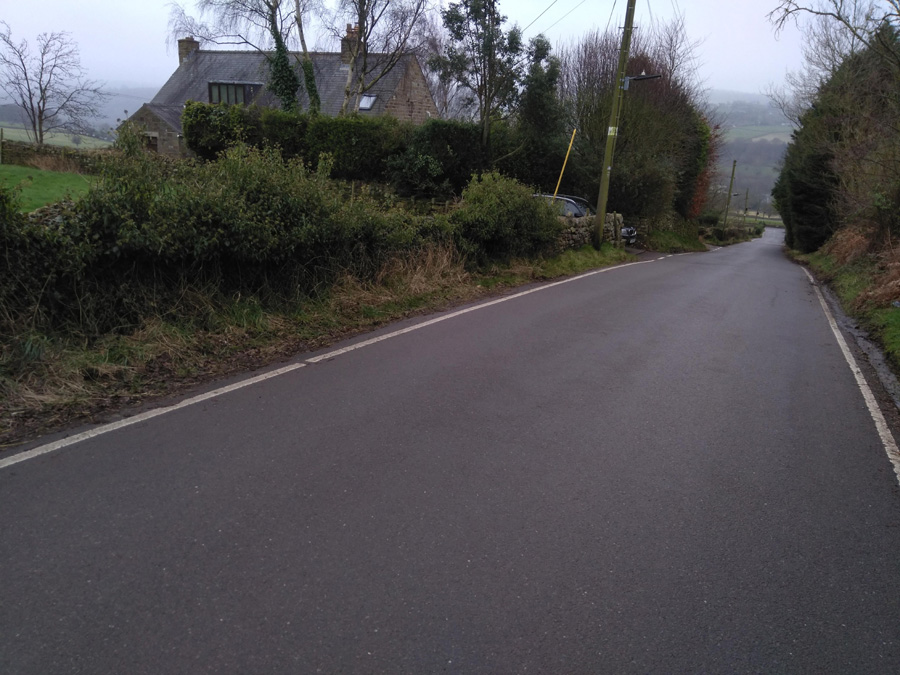
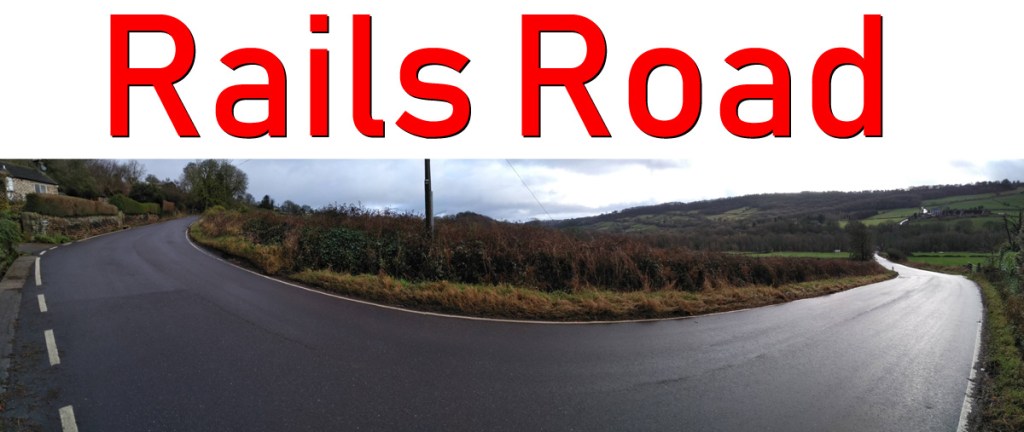
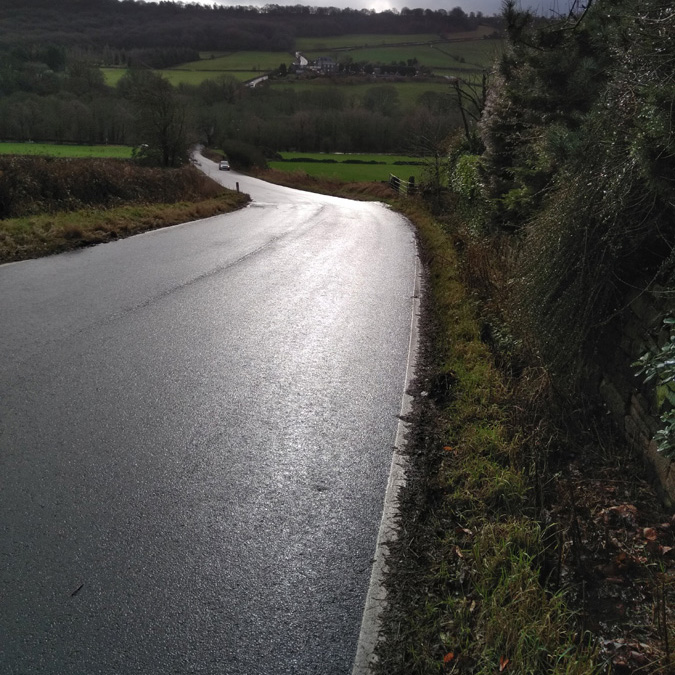
Sitting practically opposite Lodge Lane, Rails Road takes you up towards Stannington and to the cusp of some absolutely beautiful country cycling. You’re immediately on a gradient of 5-7% as you pull away from the nasty main road and in the distance you can see your main target: the sweeping right-hand bend.  There’s not many distinguishing features to pick out from the fields either side of you at this point but passing a large gate on your left is the signal for the road to ramp up into double figures.

The gradient continues to increase the closer you get to the bend, hitting a peak of 14.7% (although Strava claims 18.2%) just before you turn. You’re on the left, so it’s not quite as tricky as it could be but you’re still feeling the effort. Once you’re around the bend, you’ll run alongside a trickling culvert, which feels like it’s taunting you on a hot, sweaty day and shortly pass a footpath on your left which is where the Strava segment incorrectly shows a short, flat section. Let’s be clear: there is no short, flat section on his hill. It’s a GPS anomaly.

There is a slight relent in steepness as you reach Woodbank Road (and a great alternative route to the countryside) but carry straight on. The ride is getting easier with every pedal now and soon flattens out as you pass farmhouses on either side of the road and a gorgeous view across the Rivelin Valley.

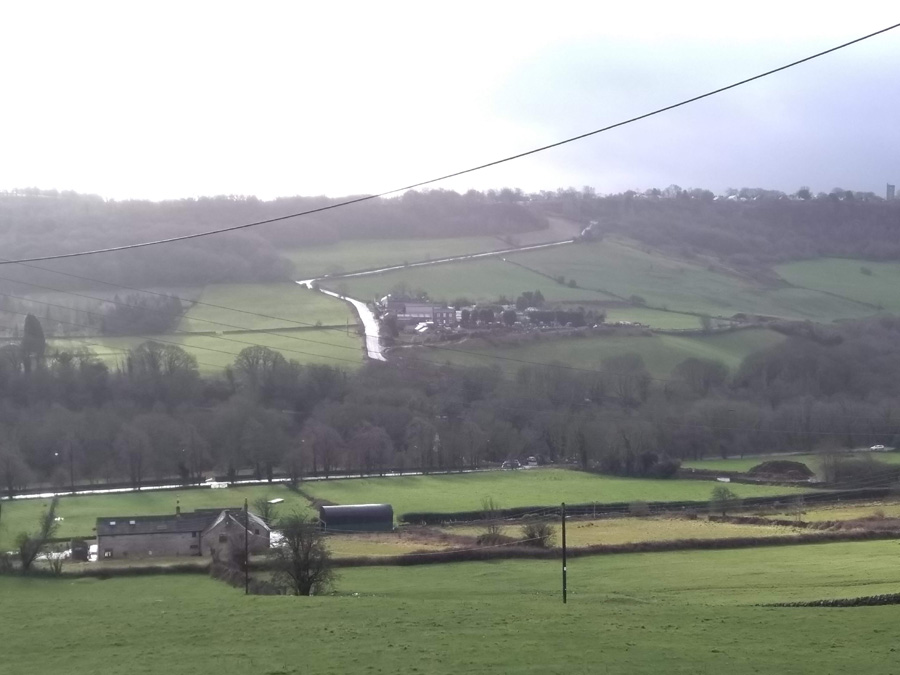
Lodge Lane, seen from Rails Road

You can either continue on to Stannington (after another bonus bump) and head out into the Peaks towards Dungworth and Bradfield, or zoom back down the hill and tackle Rails Road’s evil twin: Lodge Lane.

Roper Hill

  • Roper Hill
  • Length: 0.23 miles 
  • Avg gradient: 10.4%   Peak gradient: 15.2%
  • Difficulty: 3/5
  • Likelihood of encountering unpleasant motor-vehicles: 1/5
  • Strava

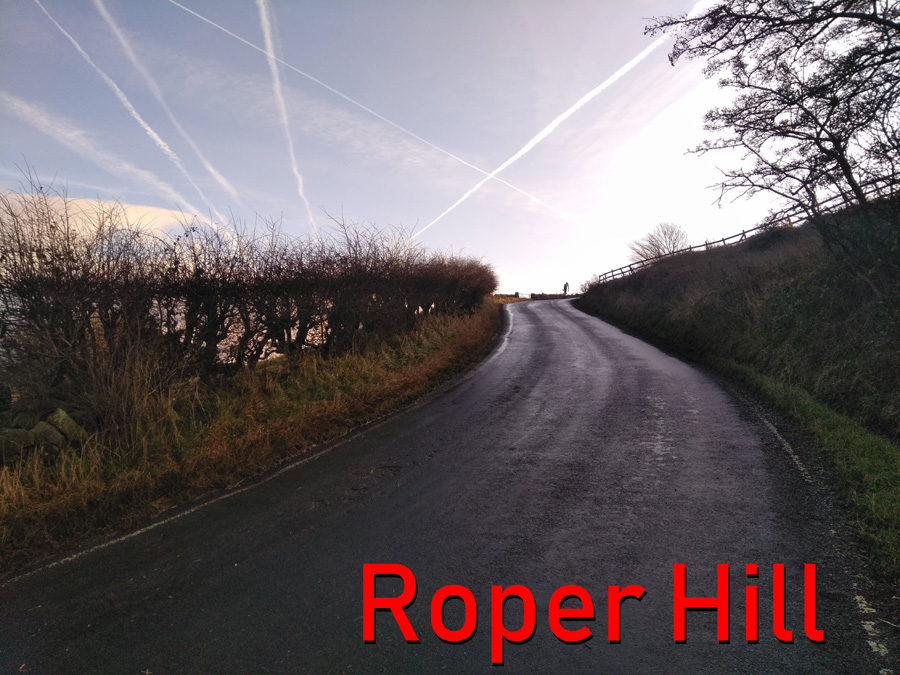
I came across this climb when I was route planning and wanted the most direct way from Redmires Reservoir to Ringinglow Road. I didn’t realise until riding that near the beginning of that direct route lay Roper Hill.

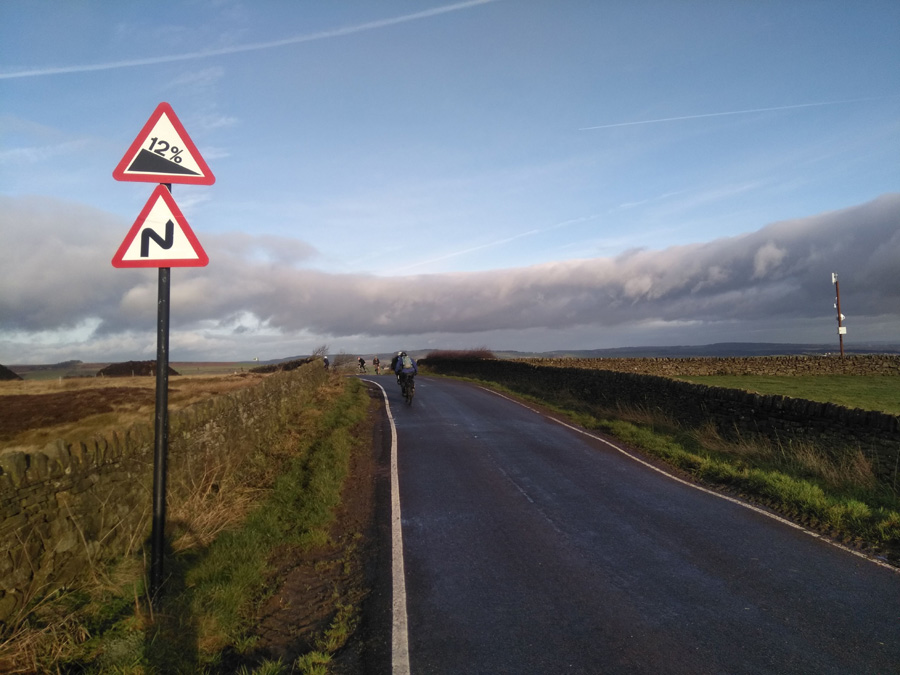
It’s less than a quarter of a mile long but, for the unsuspecting rider, its a kick in the teeth. However, I’m sure it’s a joy for hill climbers and perfect for your hill reps. Indeed, last time I rode here there was a club doing reps, with one of their number playing Andy Williams’ It’s The Most Wonderful Time of the Year to motivate them uphill.

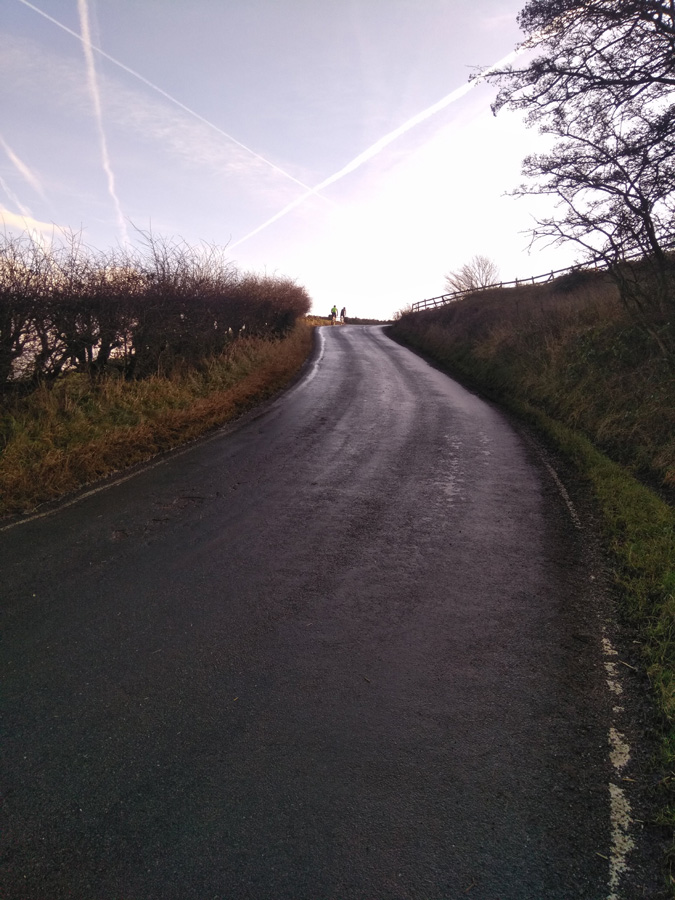
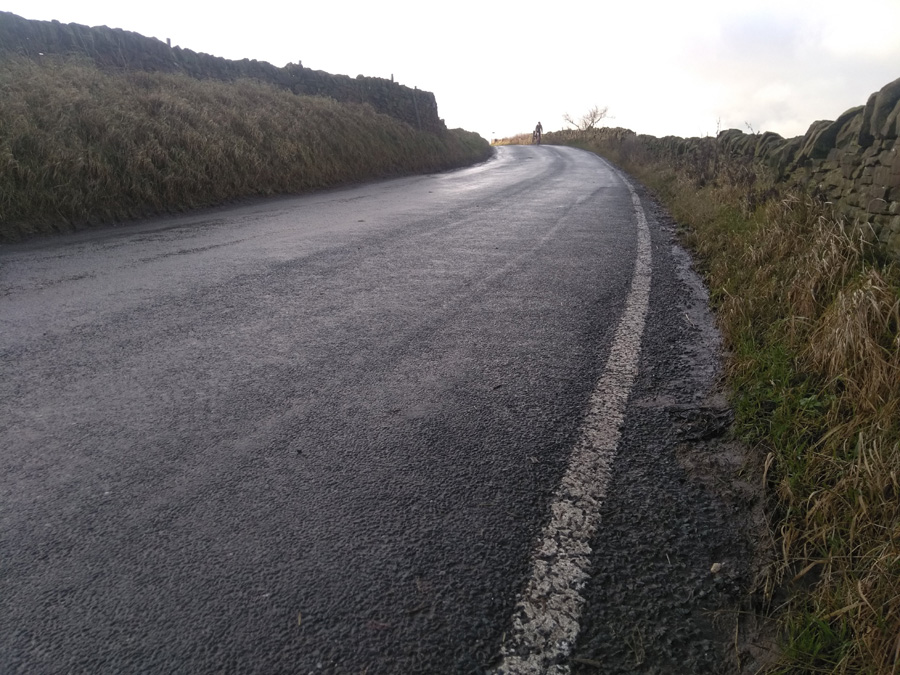
For the rest of us mortals though, prepare to dig in for a short, sharp blast. Roper Hill starts innocently enough as you turn in from Brown Hills Lane but very quickly ramps to about 8% up as you approach the first bend. The gradient only increases as you climb up the brief, straight section to the switchback. Luckily, you’re on the left, so the turn is not as punishing as it could be.

As you climb the next chunk, Roper Hill is holding a steady 11% but take a moment to glance to your right and appreciate the beautiful landscape beneath you. Let that, and the sight of the next bend at the hill’s apex (unfortunately also the steepest section at 15.2%), spur your legs on and you’ll soon be at the top.

From here, you’ve got a pleasant mile and a half ride, past the alpaca farm, to join Ringinglow Road and the options that presents.

Tom Lane

  • Tom Lane
  • Length: 0.76 miles 
  • Avg gradient: 8%   Peak gradient: 12.9%
  • Difficulty: 3/5
  • Likelihood of encountering unpleasant motor-vehicles: 1/5
  • Strava 

A nondescript, residential road in the leafier end of Sheffield, I was surprised to see that, statistically this hill is actually not that different from the far more imposing Lodge Lane.  Tom Lane is not as hard as that but it does have a couple of spikes along the way and, for the sake of this segment, a surprising little twist in its tail.  I’ve worked around here quite a bit and would regularly see a mum cycling up here with a child on the back of her bike.  Strava kudos to her for that.

Tom Lane starts innocently enough, opposite the junior school, with a gradient fluctuating around the 4-5% mark, as you climb the first couple of bends.  As you pass house number 74, however, the road straightens up, gets steeper and the hill’s first challenge is laid in front of you.  The hill is now around 12% and you feel each percentage as you pedal up to a large stone cottage at the junction of Belgrave Drive.  It is slightly less steep now but you’re still plodding upwards.

Follow the road, ignoring any junctions and continue round, first a left bend and then a right.  This little section here, for me, feels the hardest part of the road section.  There isn’t a significant increase in gradient but the approach to the right-hand bend – and the bend itself – really makes you feel like you’re dragging your bike.

You’ll soon reach a T-junction, turn right and continue upwards on what, once again, feels steeper than it is.  Take the next left (the road you turn onto remains Tom Lane) and head up this narrower section of road, often with numerous parked cars on either side.  You’ll shortly come to a brief section of 5% as you round a few more bends and pass Hillcote Close on your left. It’s here that you’re going to find that surprising twist in Tom Lane’s tail.

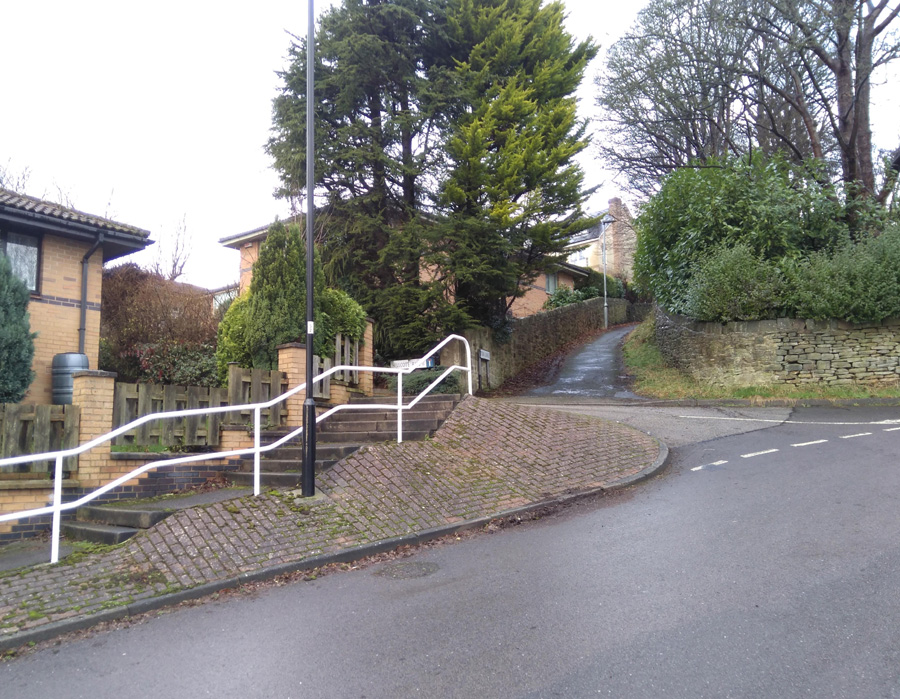
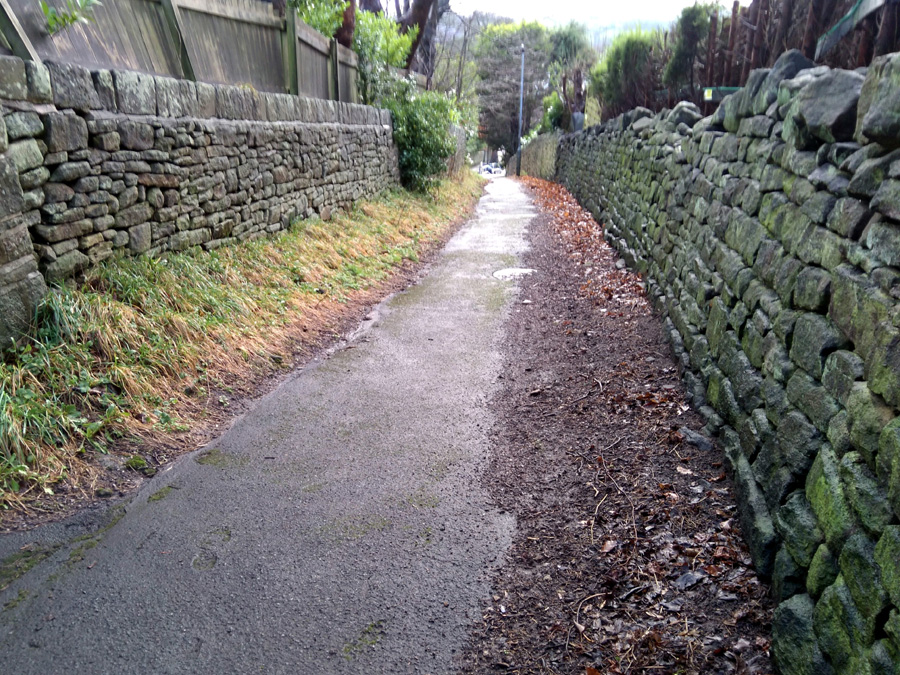
As you pass the steps with a handrail, on the left, instead of sticking to the road, wiggle round onto what looks like a footpath (there are no signs saying cycling in prohibited and it even has a Tom Lane road sign at the bottom so I’m sure it’s legal).  It’s this brief bumpy section that pulls the average up and my recording of this part puts the gradient between 17-22%. However, your fancy road bike might not like the surface.  It’s only short, though, and you’ll soon reach Redmires Road and the golf club.

Well done, you’ve just made it up a modest yet surprisingly challenging hill. Which is exactly what a Sheffield cycling climb should be.

Myrtle Road

  • Myrtle Road
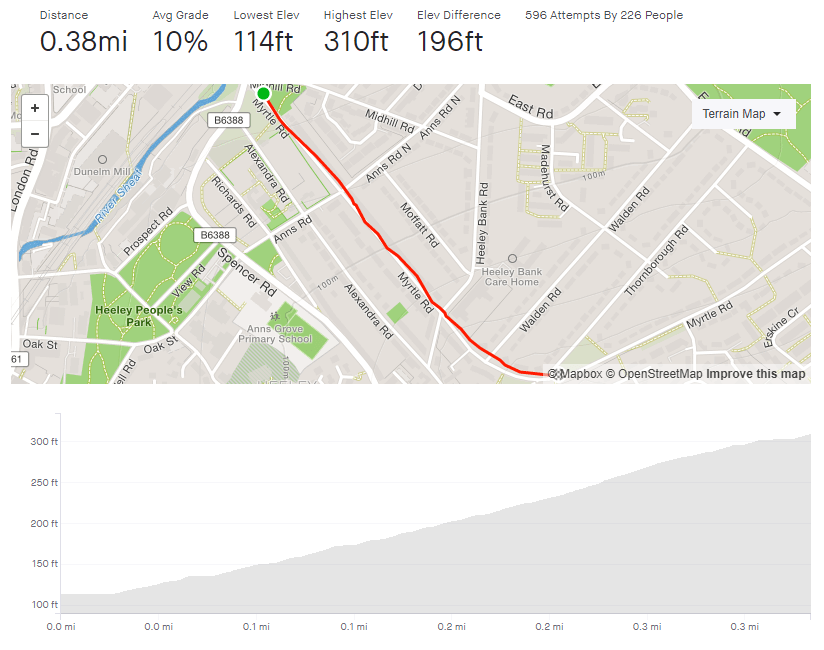
  • Length: 0.38 miles 
  • Avg gradient: 10%   Peak gradient: 16.5%
  • Difficulty: 2/5
  • Likelihood of encountering unpleasant motor-vehicles: 2/5
  • Strava

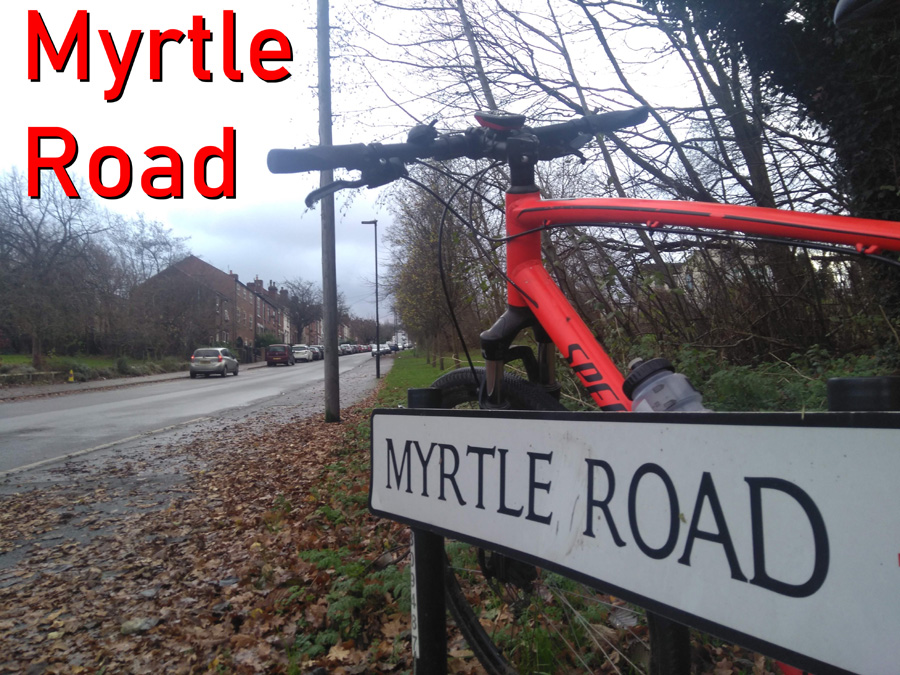
This hill climb starts just next to Heeley City Farm, a nice little slice of the countryside a couple of miles from the city centre. It’s worth popping into the Heely City Farm Café after tackling this hill for some tasty food or a hot chocolate.

Looking at the topography of Myrtle Road, it’s one of those weird streets that has a bizarre, almost unwaveringly consistent gradient. Hunter House Road and Blake Street being other examples. Strava says Myrtle Road peaks at 16.5% but while there is a little spike as you pass the Nursery at Heeley Bank Road, you are looking at a fairly solid 10% all the way up.

Begin the hill climb at the junction of Midhill Road, just after the railway bridge. There’s a row of houses on your left and what looks like a park on your right, actually contains a goat enclosure. Pick the right gear and pedal on.  Once you’re past Anns Road the hill seems to get steeper but I think that’s just because you’ve got houses and cars parked on both sides of the road, making it feel a bit more closed in and leaving you hoping that you’re not going to encounter a grumpy driver coming up or down the hill.

You’ll soon reach Heeley Bank Road and the aforementioned gradient spike. It’s not long to go now, so just dig in for that last blast before reaching the top at the site of the derelict pub and some nice views across the city. Now roll back down and pop to the farm café.

Blake Street

  • Blake Street
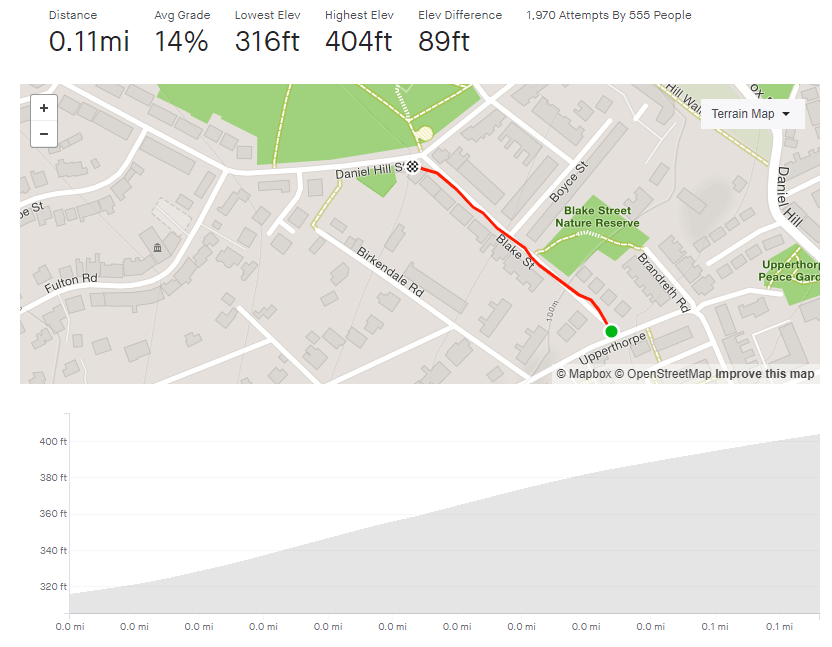
  • Length: 0.11 miles
  • Avg gradient: 14%   Peak gradient: 17.4%
  • Difficulty: 3/5
  • Likelihood of encountering unpleasant motor-vehicles: 2/5
  • Strava

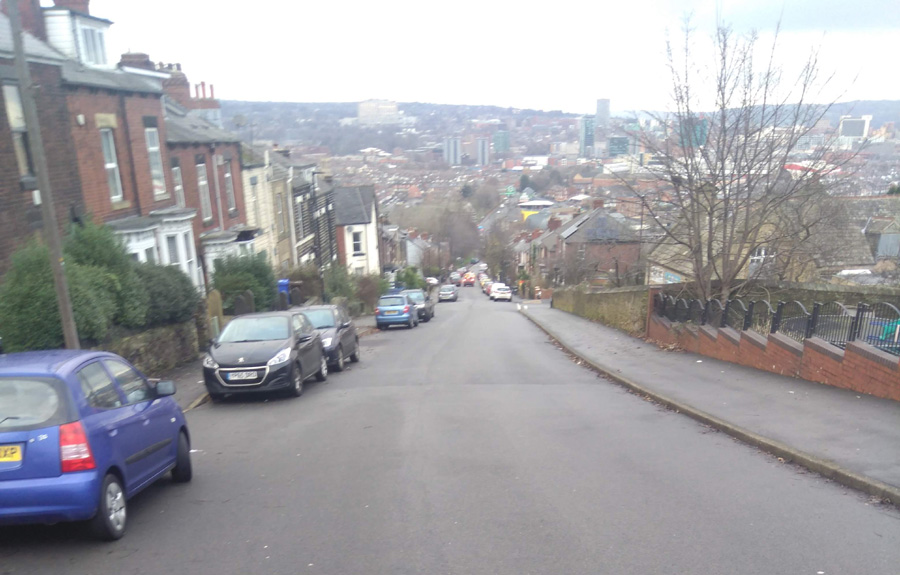
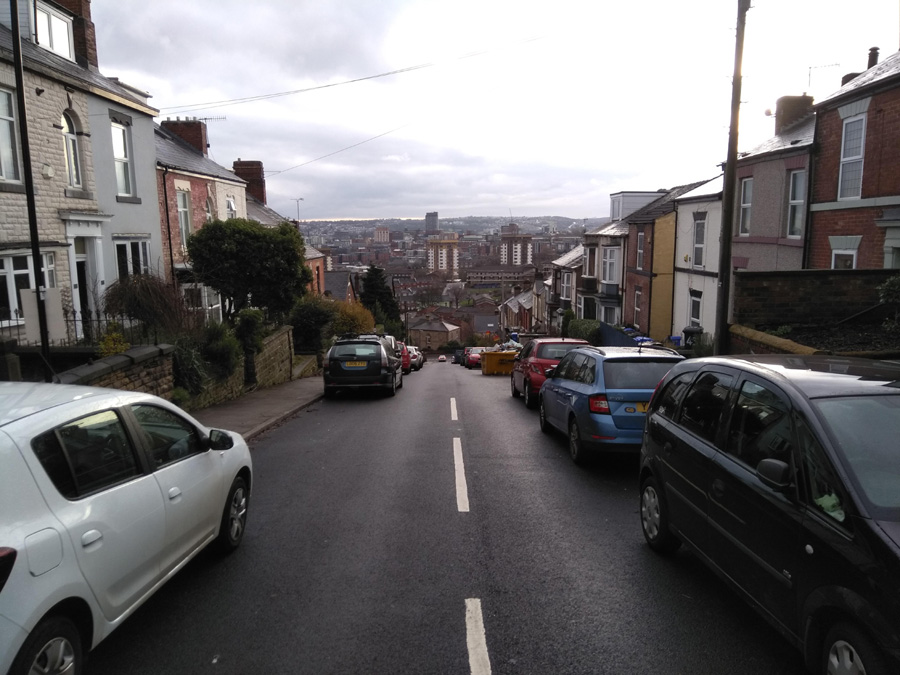
Look on any list of Sheffield’s steepest hills and Blake Street will be in there, so it was with some trepidation that I finally got around to tackling this one. Any road that has had a handrail for pedestrians, you know is going to be steep and Blake Street has one running its entire length.

You’ll feel the hill’s impact from the the moment you put your pedal down to begin the unwavering climb.  However, you’ll want to make sure that you’re in the right gear from the off, not do what I did and end up losing any momentum I had as I attempted to drop into my lower gears too late while trying to start climbing.  From there it’s just head down, breathe deep and push up as fast as you can.  You’ll quickly understand why this road features in many hill climb races.

Blake Street is a sprint though, not a marathon and, despite its reputation, I found it easier than I was expecting.  Simply put, it’s not very long, so it’s over relatively quickly.  I guess it’s a far different story if you’re a hill climb racer but if, like me, you just want to get to the top without worrying too much about times, it is perfectly doable.  Definitely one to tick off a list but if you’re looking for more of a challenge, give Hagg Hill a go: similar in character but with a higher gradient and slightly longer.

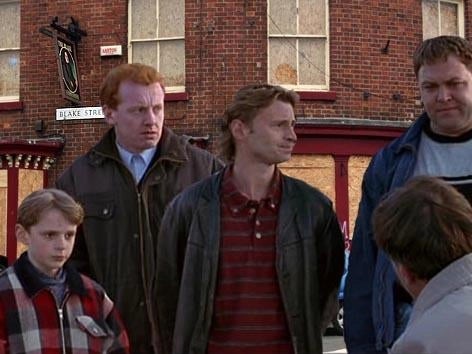
Blake Street in The Full Monty.

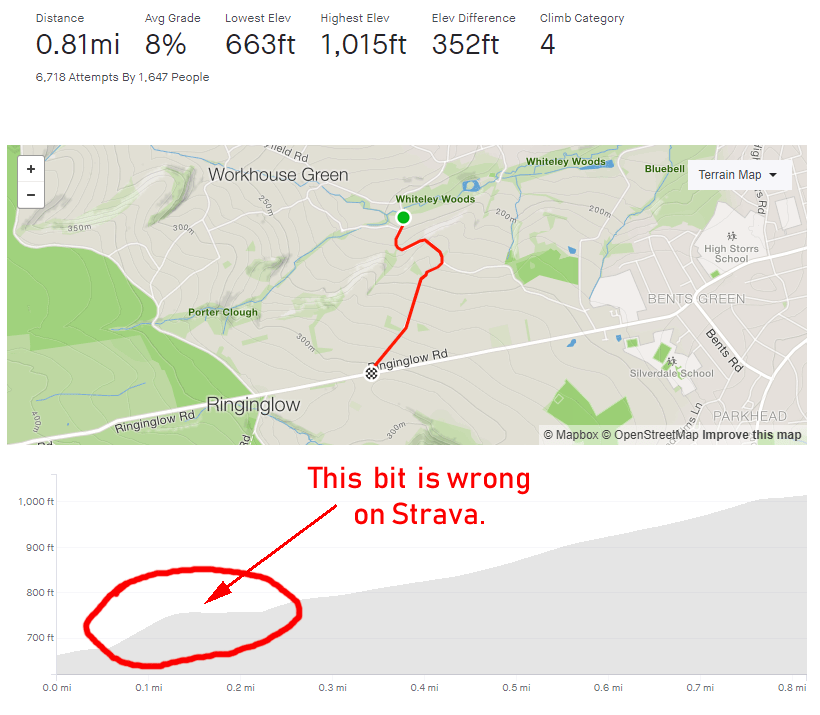
Woodcliffe & Hangram Lane

  • Woodcliffe & Hangram Lane
  • Length: 0.81 miles
  • Avg gradient: 8%   Peak gradient: 22.8%
  • Difficulty: 3/5 (steep but not too long)
  • Likelihood of encountering unpleasant motor-vehicles: 2/5
  • Strava  (Strava gets the hill’s topography incorrect. It appears as if there is a far longer flat stretch between the two climbs than there really is).

Woodcliffe and Hangram Lane is another route out of the suburbs to the edge of the Peak District but I was surprised to learn that it’s only 0.8 miles, as it feels much longer.  At its peak, you’ll join Ringinglow Road, about half-way up.  However, that hill will seem like a walk in the park once you’ve climbed this one.

The hill begins gently as the road crosses the Porter Brook but immediately picks up as it passes Clough Lane and curves around to the left. This is the hardest part of the climb and where the gradient quickly slips into double figures.  Do your best to dig in here, as this short straight section maintains its steepness until the next corner where the gradient touches the low 20s.

There is a brief blast of flat terrain before you turn right, onto Hangram Lane, where the road begins to climb once more.  You’ll pass a couple of houses before the the trees begin to drop away, revealing open farmland on either side.

Even though you’ve done the steepest bit and here the road is only averaging 7-9%, I always find this section more challenging as it feels more relentless.  Once you’re past the farm shop though, the end is in sight and you’ll shortly reach Ringinglow Road, where you can head downhill into Sheffield or upwards out into the Peak District.

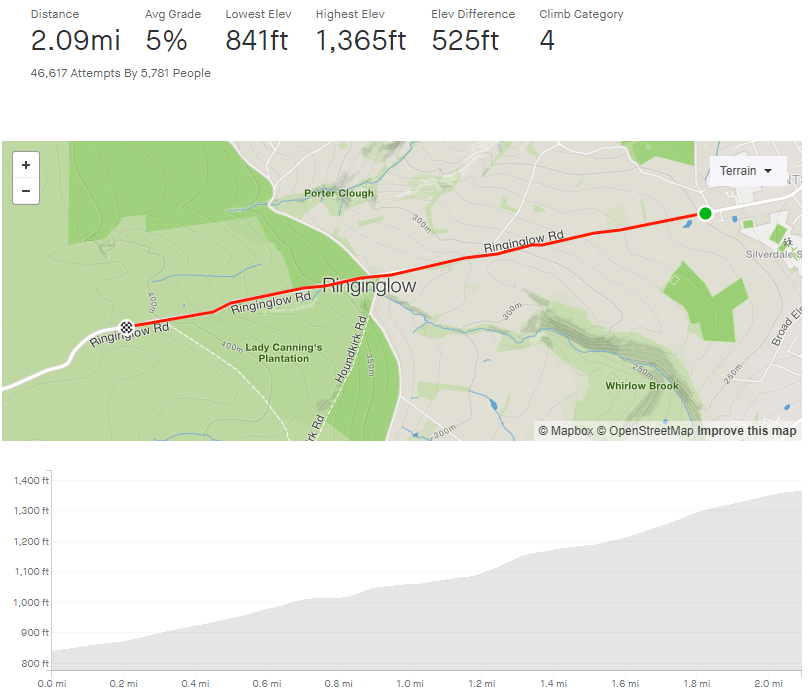
Ringinglow Road

  • Ringinglow Road (from Bents Green)
  • Length: 2.09 miles
  • Avg gradient: 5%   Peak gradient: 10.6%
  • Difficulty: 3/5
  • Likelihood of encountering unpleasant motor-vehicles: 3/5 (It’s a 50/50 on driver attitude, despite plenty of available passing space).
  • Strava

Ringinglow Road is a steady gateway into the Peak District.  Leaving the suburbs of Bents Green behind, you’ll soon find yourself atop the world, on the edge of some of the most beautiful scenery in the country.  While Ringinglow Road can feel a bit of a slog, with it’s arrow straight direction, each turn of the crank gets you closer to some stunning countryside (and extremely fun descents).  Keep that in mind and you’ll be at the top in no time.
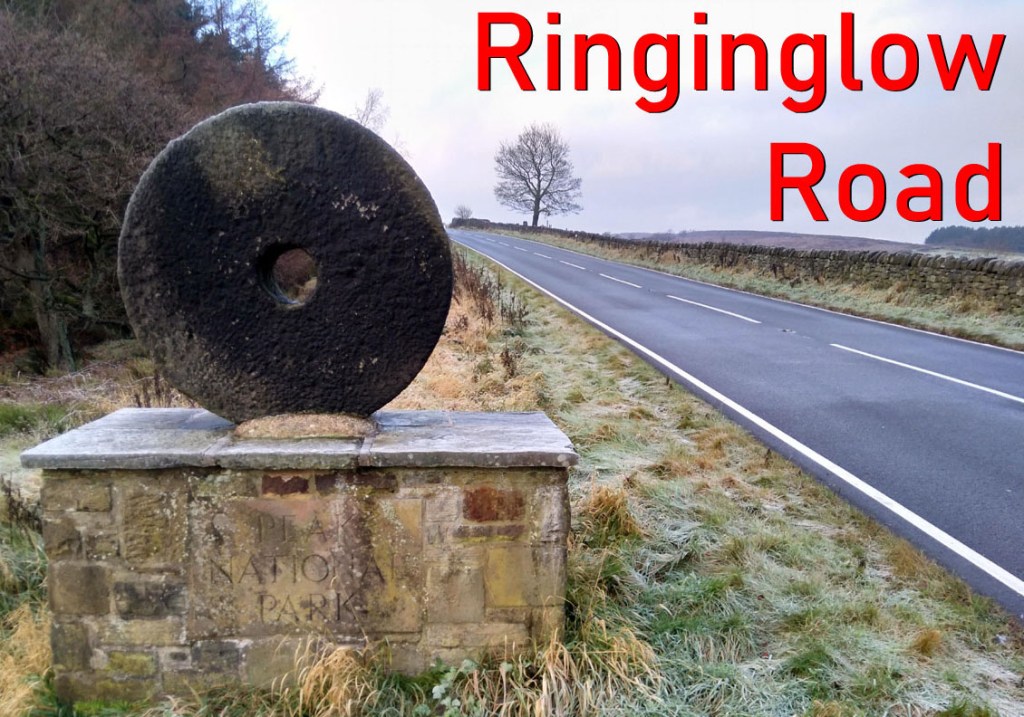
Starting at the junction of Common Lane, Ringinglow Road stretches ahead, well into the distance.  Never appearing too steep, it does have a couple of sneaky lumps waiting for you.  The hill’s first, tree-lined, half mile isn’t too strenuous, rarely touching 5% but just as the trees give way to reveal rolling countryside and you pass some farmhouses, a couple of cheeky spikes appear doing their best to pull up the average gradient.

The road briefly flattens out at Hangram Lane (which is a speedy descent) giving you a moment to recharge your legs and power on to the one mile mark and The Norfolk Arms pub.  Ignore the turnings and head straight on.  Once you’ve tackled a short 10.9% section you’ll soon be crossing into the Peak Distrct, marked by an iconic millstone.  From here it’s a steady slog upwards with the Lady Cannings Plantation on your left and ever more sprawling moorland on your right. Shortly passing the byway to Houndkirk Moor (and Lady Cannings’ MTB trails) and you’re at the top of the segment.

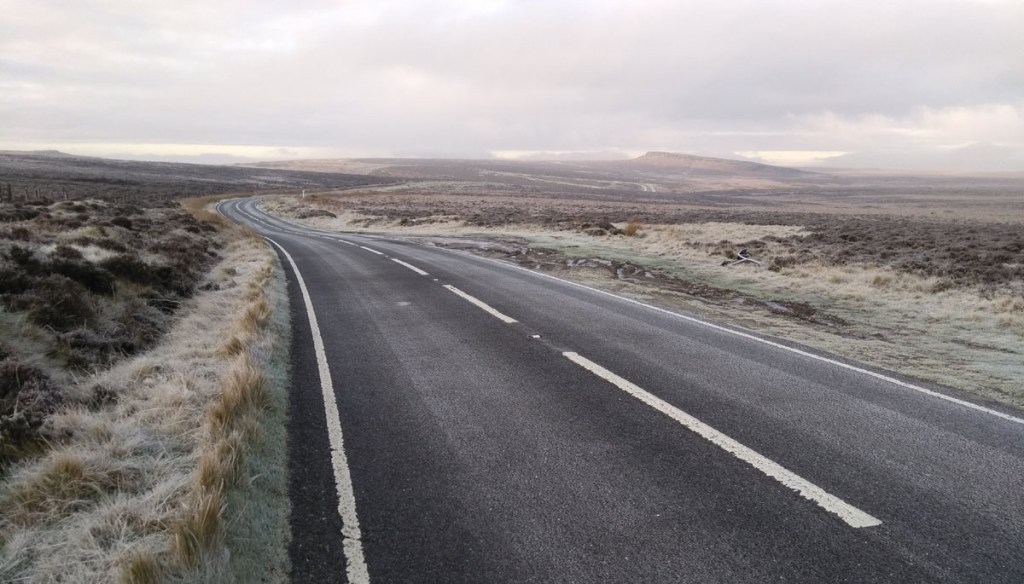
A little further on and you are presented with the glorious sight of Stanage Edge (above) in the distance and a couple of very enjoyable options downhill into Hathersage.