Tag: road

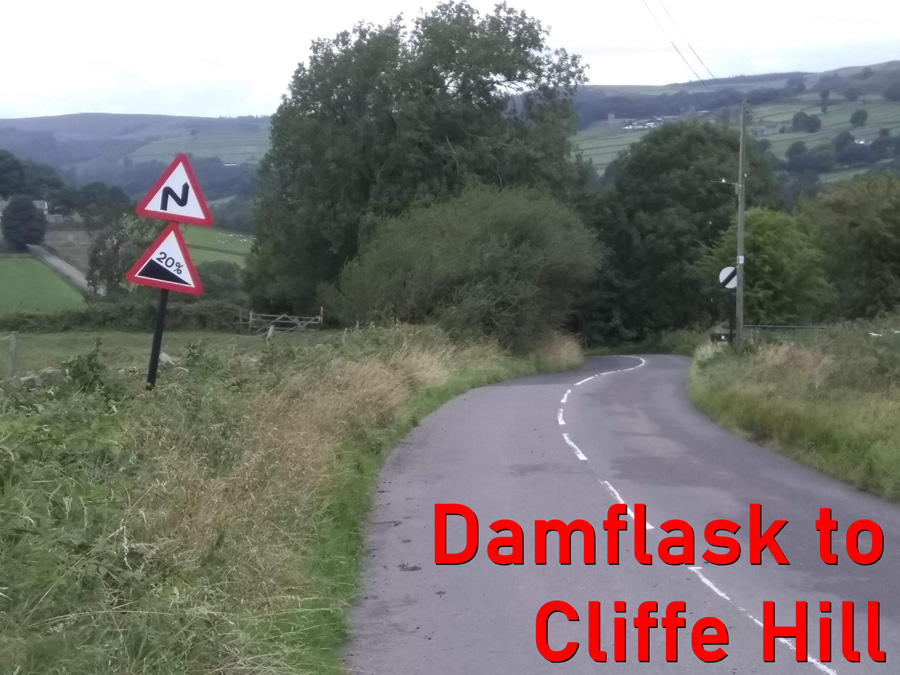
Damflask to Cliffe Hill

  • Damflask to Cliffe Hill
  • Length: 1.08 miles
  • Avg gradient: 4.2%   Peak gradient: 25%
  • Difficulty: 3/5
  • Likelihood of encountering unpleasant motor-vehicles: 2/5
  • Elevation gain: 242ft
  • Strava

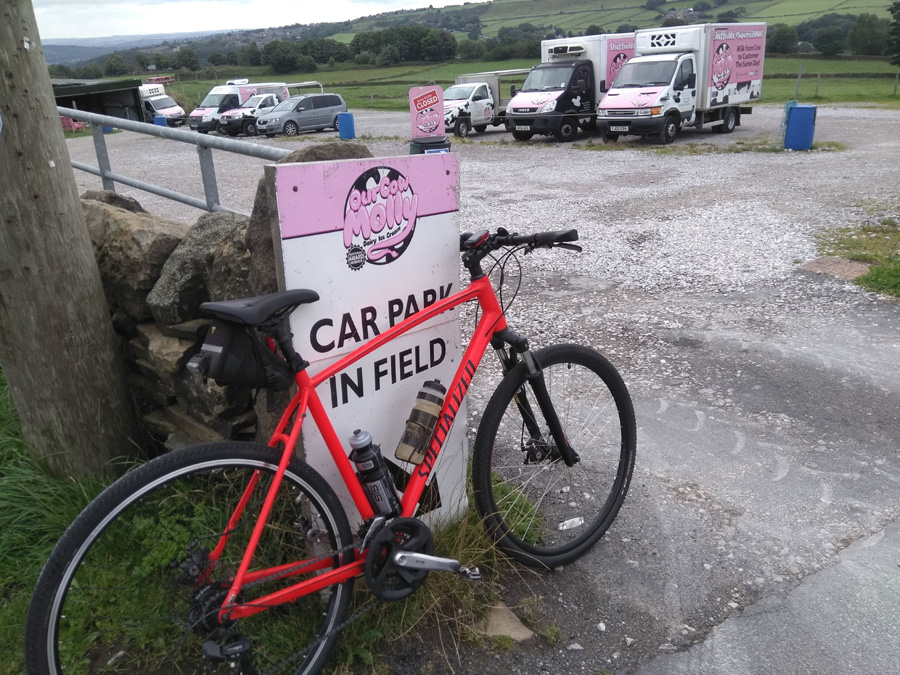
From the reservoir to the ice cream.
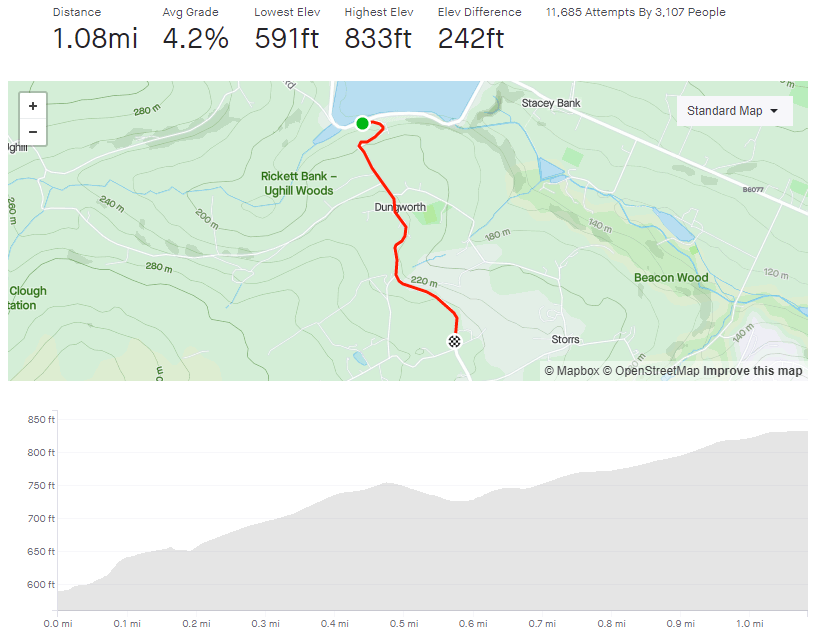
Don’t be lulled into a false sense of security when looking at the average gradient, this climb includes a chunk of descent and, at the very start, a couple of torturous turns.

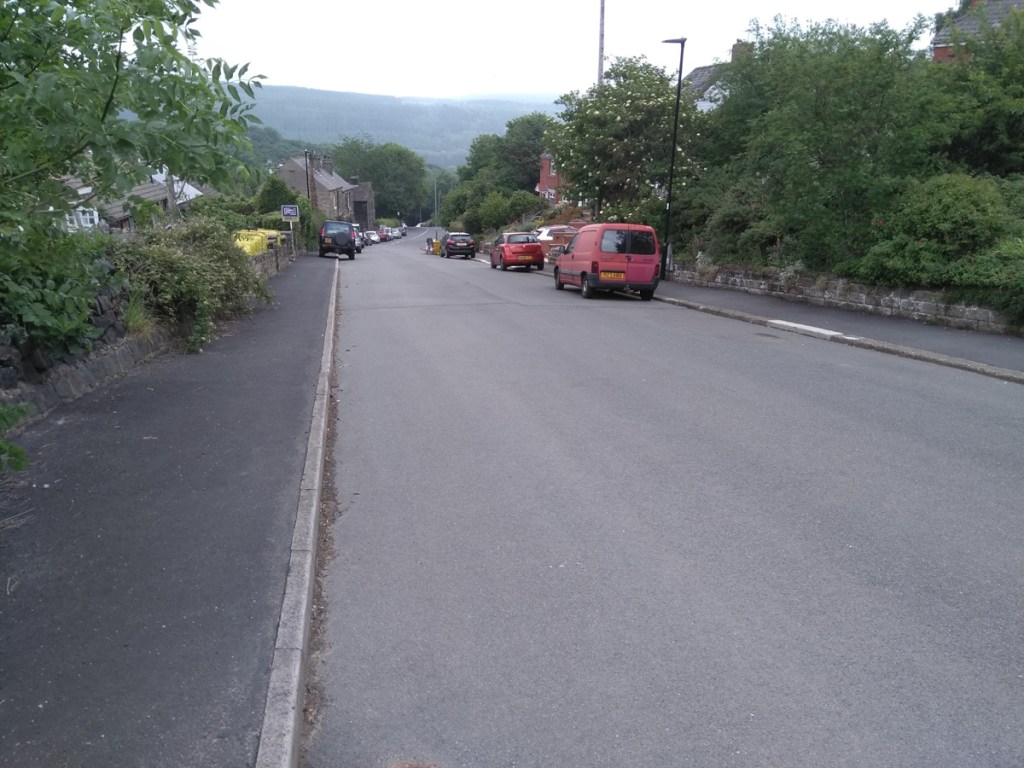
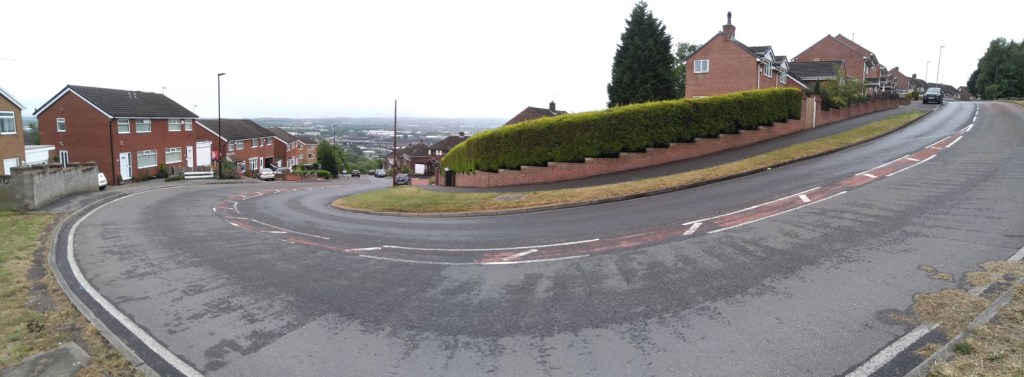
Begin at the south side of Damflask Reservoir, a body of water surrounded by numerous challenging cycle climbs. You could probably make a nice day trip to do them all in one go. The one we’re focusing on though probably has the hardest opening. Turning sharply on to Briers House Lane, the approach to the first switchback quickly reaches 9% before ramping up to 25% at the corner’s apex.
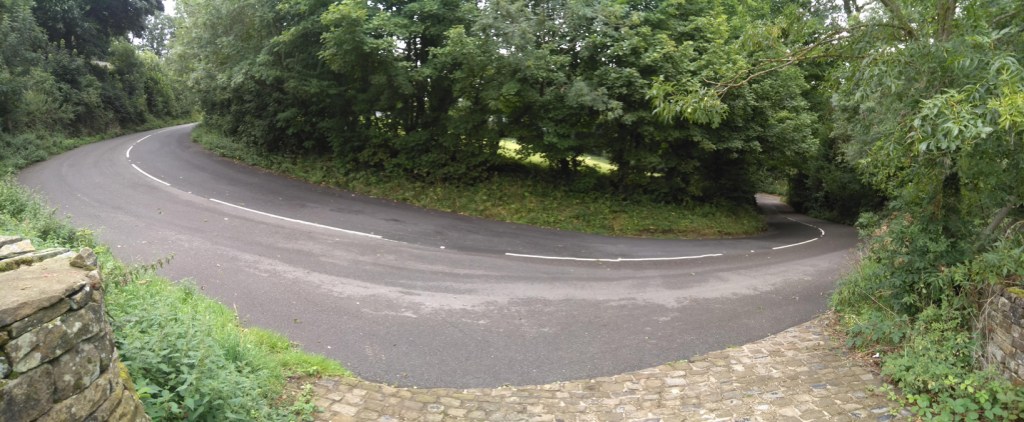
That’s the steepest bit of the climb over with quickly but you’ve still got about a mile to go before you reach Our Cow Molly and that ice cream you’ve been promised. It’s a similar distance to the next switchback but, this time, hovering around the 5% mark, so not so steep. Take glance to the right, looking out over the reservoir, to appreciate how high you have already climbed.

Strava says that the corner is only 12%, but it also says there is a little descent beforehand, so I think there must have been some GPS errors when this segment was made because there certainly isn’t a drop and I can’t believe that the second corner is any shallower than the first, especially as you need to be on the inside of this one.

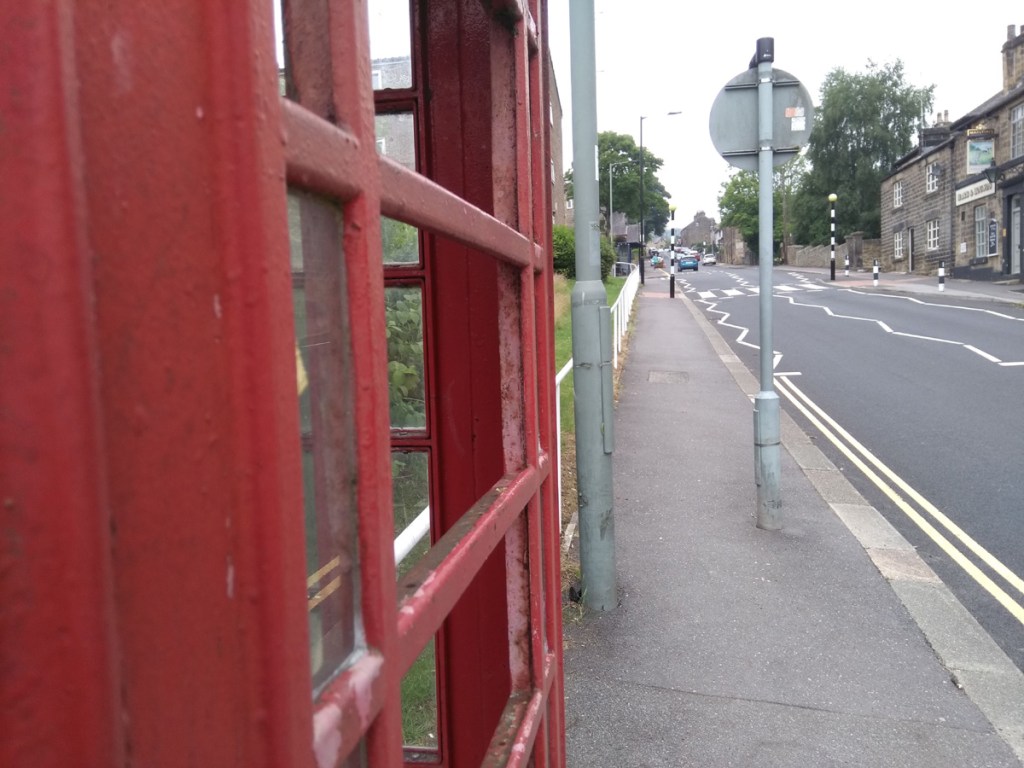
The good news is that it’s a much gentler climb from here on. The straight section ahead fluctuates between 5-9%, and it was here, at the large stone marking the entrance to the hamlet of Dungworth, that I was originally going to end the climb entry but the hill does continue to ascend. So, carry onwards through the village and, as the road wiggles slightly, you’ll see an old phonebox (which now contains a defibrillator, I think) that marks the short descent before the final climb.
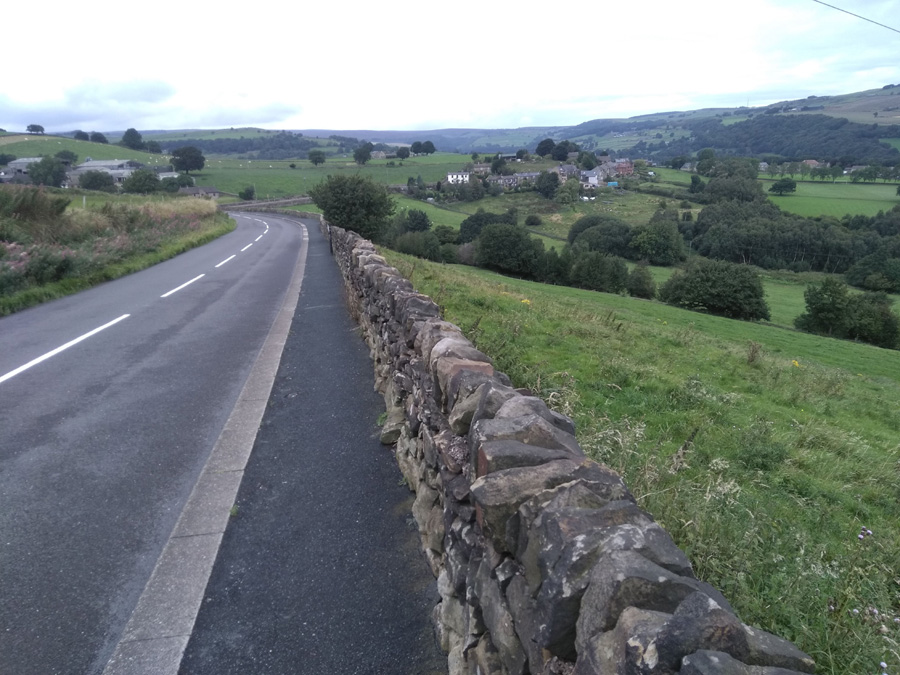
Stay on as the road bends around to the left and the view of the valley below really opens up. It’s a gentle climb, mostly staying in the low single figures, before you finally arrive in a place called, appropriately enough, ‘Hill Top’ and Our Cow Molly, with that ice cream you’ve been looking forward to.
Burnt Hill Lane

  • Burnt Hill Lane
  • Length: 1.26 miles
  • Avg gradient: 8.7%   Peak gradient: 14.7%
  • Difficulty: 3/5
  • Likelihood of encountering unpleasant motor-vehicles: 3/5
  • Elevation gain: 583ft
  • Strava

Jawbone Hill’s evil twin.

Starting from almost the same spot as Jawbone Hill, Burnt Hill Lane heads in the opposite direction and gives you a harder time than its more celebrated sibling.

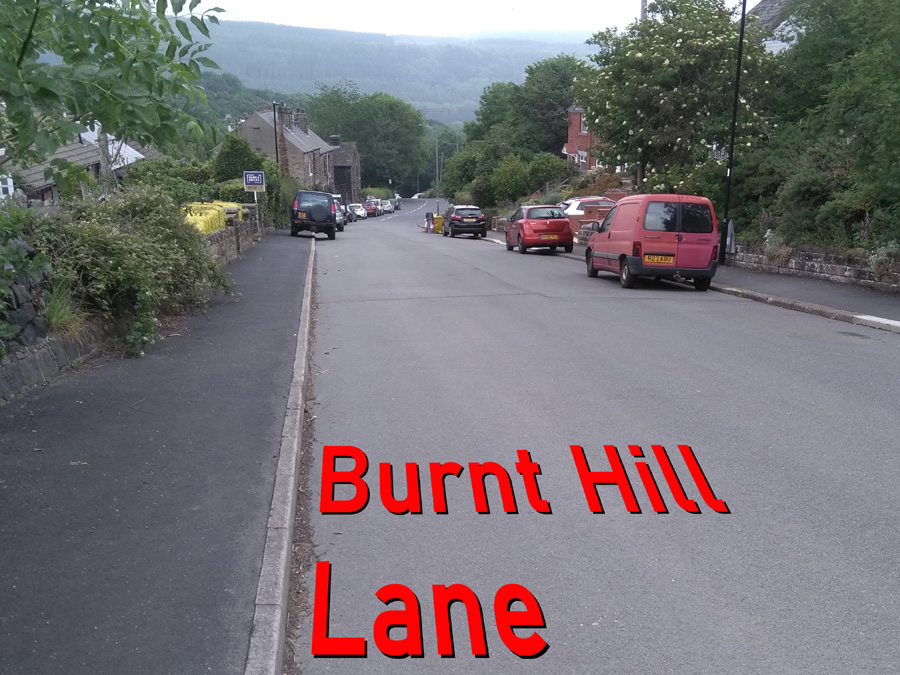
You begin at the telephone box on Church Street, at one of Sheffield’s most dangerous junctions for cyclists (so take care on your way down)! Luckily you’re heading uphill and excess speed and momentum are not going to be troubling you much. You’re straight into it, as you head away from Oughtibridge, with a gradient fluctuating between 5 and 10%. The inconsistent gradient is a feature that Burnt Hill Lane retains for the entire climb.

Once you’ve passed the two churches the road mellows out for short period but, since there’s usually cars double parked all the way, the bigger challenge is going to be avoiding oncoming traffic or irate drivers behind you. I’ve been known to take a brief detour onto the pavement to allow cars to pass and if you do the same, since you’re going so slowly, you’ll not present a danger to any pedestrians.

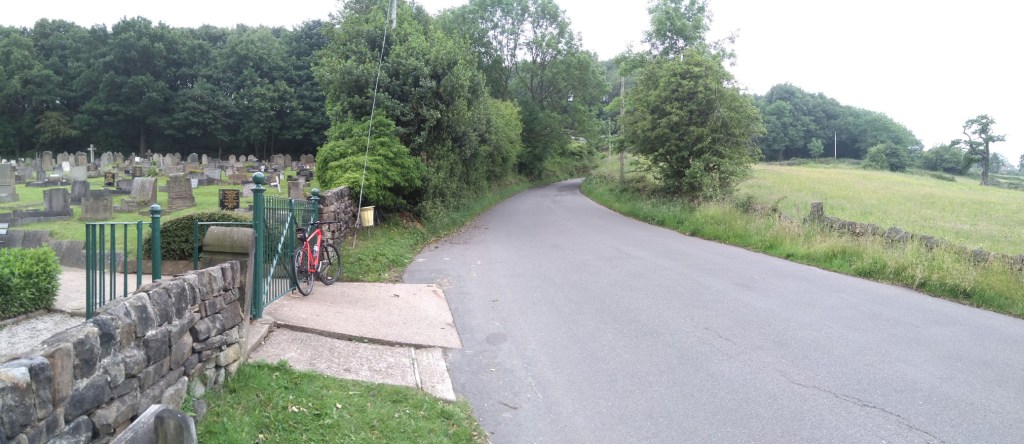
The road bends to the left and the gradient picks up into double figures again, shortly passing the entrance to the excellent Wheel Lane on your right. The climb ramps up again as you pass Haggstones Road, holding around the 10% mark, and it’s here that you begin to cross into the countryside. Pedal on as the road begins to get more rural, much narrower and eventually surrounded on either side by fields. As you pass the third church of the climb, you hit the steepest 14.7% section: a blind and sharp 90° turn. Cross your fingers nothing is coming downhill!

The road eases off for about 300 metres, giving you a chance to appreciate the view, before ramping up to around 14% again, at the junction with Old Lane, a little track leading to a farm. There’s a bit of a false summit ahead but once you crown that, it’s single figures until you reach Coal Pit Lane and the end of the segment. You can either take Coal Pit Lane or continue straight on, both roads lead you to Kirk Edge Road and a couple of lovely descents.

It’s not as famous as the Cote de Oughtibridge and it’s harder but the pay off at the top is worth it. Just be careful descending, it can be quite hairy in places!

Cobnar Road

  • Cobnar Road
  • Length: 0.31 miles
  • Avg gradient: 13.5%   Peak gradient: 30ish%(!)*
  • Difficulty: 4/5
  • Likelihood of encountering unpleasant motor-vehicles: 1/5
  • Elevation gain: 226ft
  • Strava

An utterly deceptive beast.

Cobnar Road is a residential street that begins innocently enough but it is truly lulling you into a false sense of security.

‘What’s going on here? This doesn’t seem too challenging and the gradient is only in single figures,’ you’ll think as you start the climb. Fair enough, Cobnar Road does begin unremarkably enough but what you might not notice straight away is how it gets progressively steeper, the further you progress.

When you pass Bingham Road, you might sense that the hill has sneaked into low double figures but nothing noteworthy. However, another 50 metres or so, at the junction with Wellcar Road and the ‘dead end’ road sign, the gradient suddenly spikes into the teens. It’s at this point that you realise how the start of the climb tricked you.

Looking up, all you can see the rising tarmac and what looks like an impenetrable wall of trees. Dig in here as the worst is yet to come. Luckily the road is fairly wide and quiet, so you’ve got wiggle room and few hazards as you wind your way up the hill. This is where the fun starts.

Keep your momentum and switch on to what looks like a footpath (it’s not labelled as such, so you’re not breaking any rules by cycling up it). The narrow path (featuring a handy handrail) disappears around a blind corner – so you’ll have to hope that you’re not going to meet anyone walking down the opposite direction – and ramps up to a gradient of 17 – 18%. It’s only for 100m or so but, because of the path’s width and probably being slippery with leaves, there’s no room for mistakes. The last time I did it, I very nearly came off the tarmac and into the little ditch next to the path.

I seriously put Cobnar Road on a par with Hagg Hill, which is the bar against which I judge all other hills. So, if you get to the top without stopping, take a moment to get your breath back and congratulate yourself on, not only defeating such a cheeky beast of a climb but probably one of the most challenging hills in Sheffield.

*GPS coverage is a bit wonky under the trees at the top, with both Strava and Veloviewer saying an incline of almost 40%. That seems excessive but I wouldn’t be surprised if it does briefly break 30% at the end.

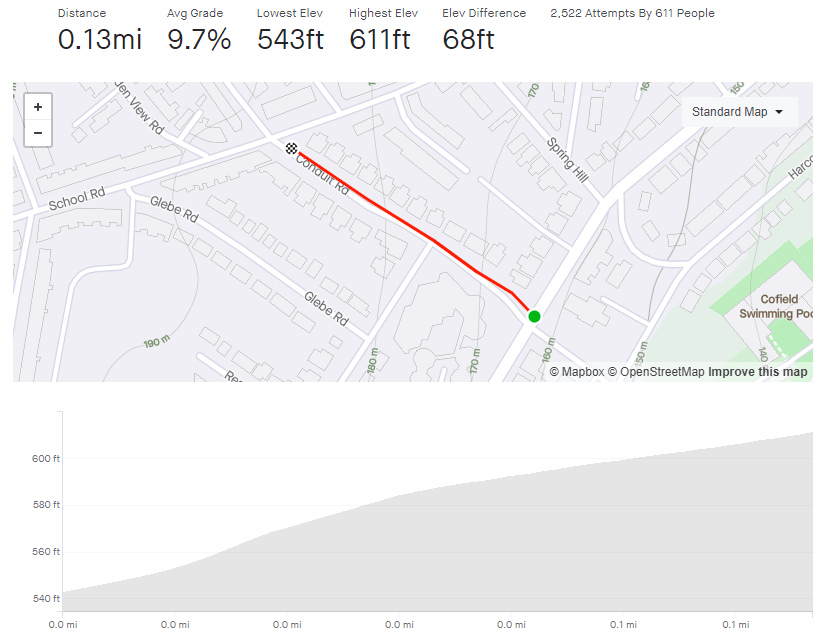
Conduit Road

  • Conduit Road
  • Length: 0.31 miles
  • Avg gradient: 9.7%   Peak gradient: 13.1%
  • Difficulty: 1/5
  • Likelihood of encountering unpleasant motor-vehicles: 2/5
  • Elevation gain: 68ft
  • Strava

A quick zip up a never too steep hill.

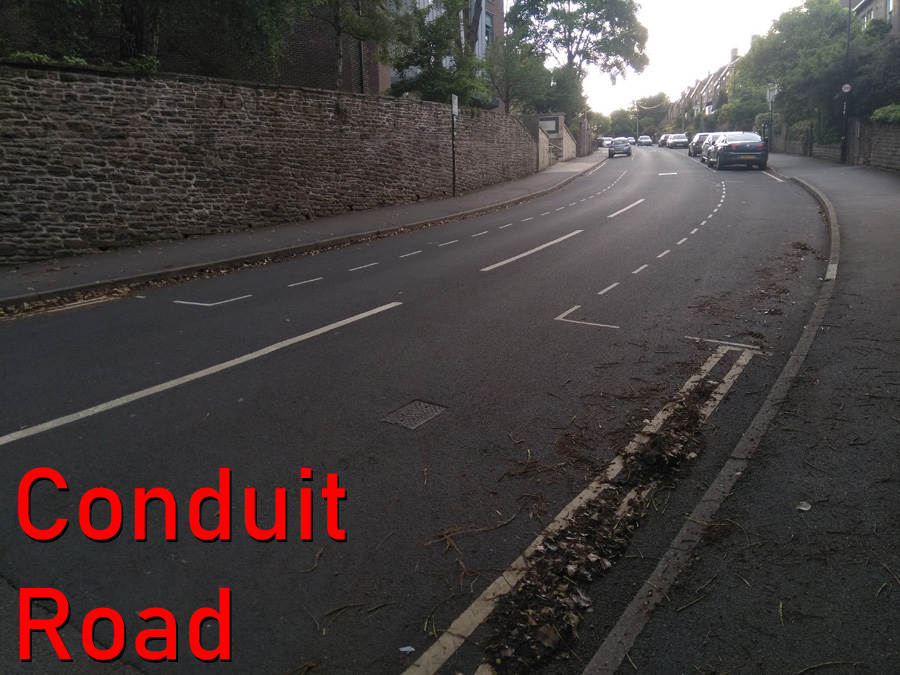
The hill begins in earnest, opening with a 12-13% incline as you pass the Management School. There is a gentle curve in the road and cars will probably be parked on both sides, so be aware of any oncoming vehicles. This is the steepest section and the gradient begins to reduce to single figures once you pass Redcar Road, ending at around 7% at the apex with School Road.

A little blast that won’t set the cycling world alight but a happy, little challenge none the less.

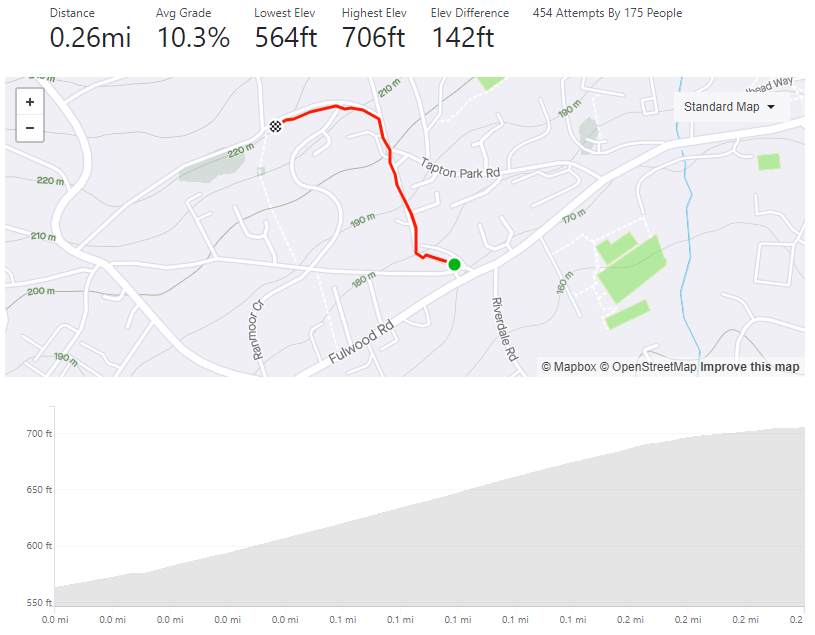
Ranmoor Park Road

  • Ranmoor Park Road
  • Length: 0.26 miles
  • Avg gradient: 10.3%   Peak gradient: 14%
  • Difficulty: 3/5
  • Likelihood of encountering unpleasant motor-vehicles: 1/5
  • Elevation gain: 142ft
  • Strava

It’s like the evil twin of the neighbouring Ranmoor Crescent. This road has all the climbing but none of the forgiving bends. It’s a straight up (literal and figurative) stinker.

You begin, just off Fulwood Road, by the Ranmoor Inn. As the road curves around the church you’re immediately into a dead straight 10% climb. To add insult to injury, as you slowly climb up the hill, the gradient gently increases, peaking out at about 14% as you pass Tapton Park Road. At this point, it definitely feels harder than you expect.

Keep on peddling and you’ll soon reach the sweeping left hand bend where the gradient drops down to 7.5%, and you pass Ranmoor Crescent. Grind on a short distance more until the end of the segment and then, when you reach it, ask yourself why you didn’t just ride up Ranmoor Crescent instead?

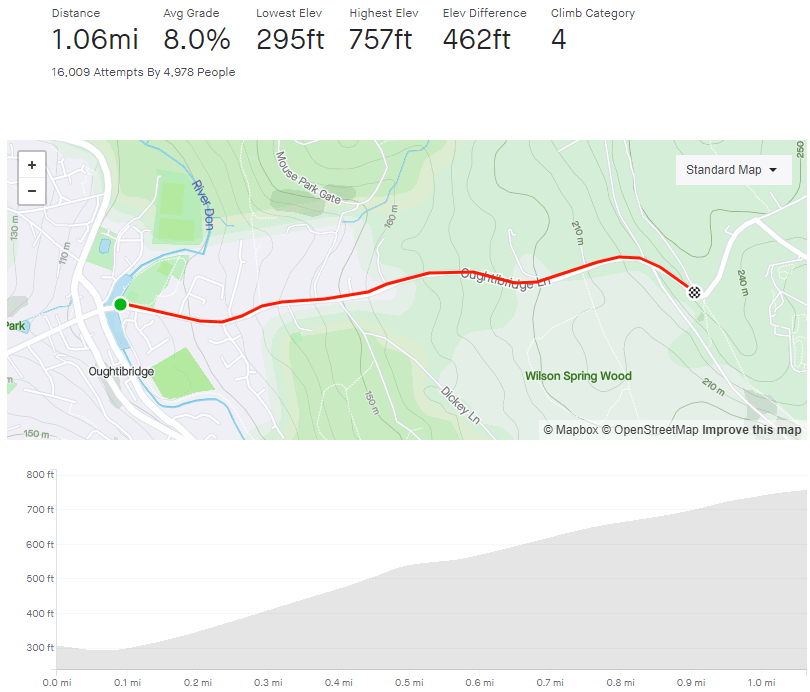
Jawbone Hill / Cote De Oughtibridge

  • Jawbone Hill / Cote De Oughtibridge
  • Length: 1.06 miles
  • Avg gradient: 8%   Peak gradient: 13%
  • Difficulty: 3/5
  • Likelihood of encountering unpleasant motor-vehicles: 4/5
  • Elevation gain: 462ft
  • Strava

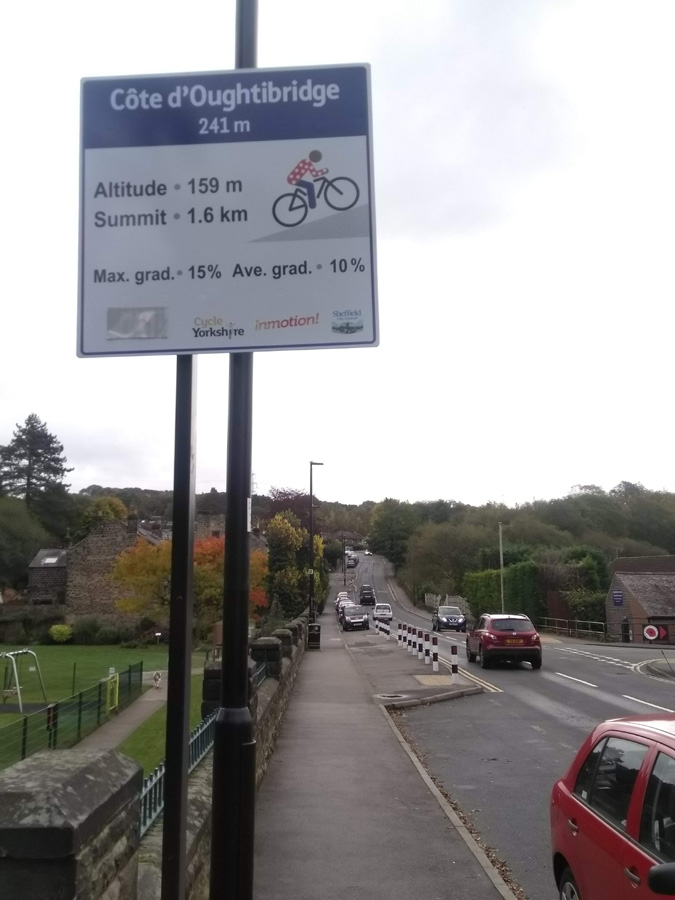
Described as possibly ‘the most decisive climb of the Tour De France’s visit to Yorkshire,’ The Cote De Oughtibridge (or Jawbone Hill to its friends) is a slog of a climb with a few false summits along the way.

The Strava segment starts at Grand Depart sign but it’s actually a short distance before the incline begins. Similarly, the segment ends at the Birley Stone, despite there being a few more feet to climb after that point.

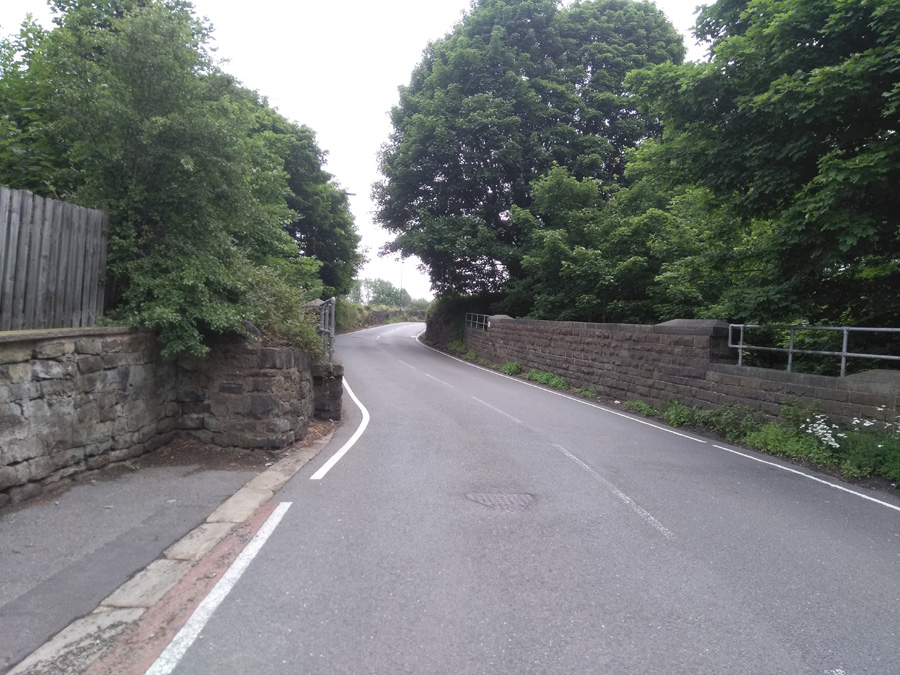
With the park on your left, the start doesn’t look too foreboding, at around 6%, but by the time you’re passing The Pheasant pub, the hill has already sneaked into double figures at 11%. A short way on from this you’ll find that the road narrows as you cross over a railway line. Plod on and hope that you’re not be being followed by an impatient motorist unable to overtake you.

After the wiggle of the railway bridge, you’re onto the steepest 13% segment of the climb, which it roughly maintains until you reach Greenhead House Farm and The Little Sausage Shop. Rumour has it that somewhere on Jawbone Hill is a ‘Scotch Egg Shop’ but I suspect that, in reality, it’s this sausage shop they’re thinking of. Along here, on your left, you will spy the first of two reminders of the Tour De France’s visit: a yellow painted bike fixed to a metal ‘Shimrod’ sign, and shortly afterwards, opposite the farm, a battered old bike tied up in a tree.

Once you’re past the sausage shop, the gradient drops to a more palatable 5.5% but don’t be fooled, this is just the first false summit! The climb continues, slipping back up to 9.5% as the road bends to the right. You are well into the countryside now and while the steepness does relent a little, the hill is just playing with you. It’s got one last stinker in store.

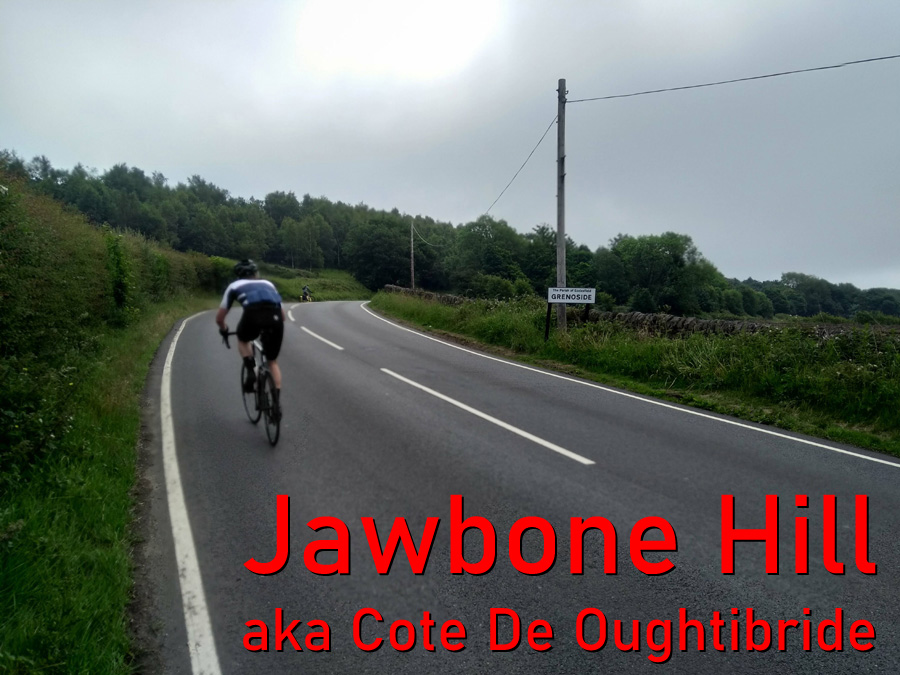
The road begins another right-hand bend and, as you pass the Grenoside sign, you feel that must be the apex…but not quite! Although it’s apparently only 6.5%, the final 150 yards up to the Birley Stone always feels much harder than it should.

The end of the segment might not be the absolute top of the hill but it’s a great place to stop and take in the view over Sheffield. It’s also a great place to turn around and speed right back down to Oughtibridge.

Fiddler’s Elbow

  • Fiddler’s Elbow
  • Length: 1.62 miles
  • Avg gradient: 7%   Peak gradient: 9.7%
  • Difficulty: 4/5
  • Likelihood of encountering unpleasant motor-vehicles: 2/5
  • Elevation gain: 562ft
  • Strava

A never too demanding climb with some lovely views, Fiddler’s Elbow is probably your best option to get from Hathersage to Sheffield. It’s easier than The Dale, has far fewer motorists than Surprise View, and remains a satisfying challenge.

Although the 1.62 mile climb officially begins at the turning for Ringinglow, off the A6167 out of Hathersage, if you’re coming from that direction, you have to ride up a mile of at what seems far tougher than the 5% that my calculator says it is. It’s probably because it’s such a busy road that it feels harder than it really is. Whatever the reason, when you see the turning for Ringinglow it comes as a bit of relief. Short lived relief before the real climb begins, admittedly, but relief none the less.

As you leave the busy road behind and pass the farmhouse on your right you are straight into this one. Strava reckons this is 15% but that’s not right, Veloviewer gives it a much more plausible 8%, which sets the tone for the rest of the climb. Shortly the trees on your right give way to the moors, the view opens out, and in the distance you can see the rocky outcrop of Callow Bank, which gives you a rough target to aim for.

The road continues in a fairly straight line, meeting a slight curve at the 0.3 mile mark but the gradient plods on, holding steady between 6 and 8%. Once you’re around the curve, the fields’ terrain begins to rise on your right and drop away on your left and you begin the first sweeping right-hand bend. It’s here that you’ll get your first proper glimpse of Higger Tor, where your climb will conclude.

Before then, you have to find your way up what, I assume, is the ‘fiddler’s elbow’ that gives the road its name. Briefly touching 8.5%, this dent in an otherwise fairly straight line gifts you an absolutely fantastic view over the Hope Valley. You’re now over halfway (and fairly level with Callow Bank) so just keep plodding on towards the apex, which feels like it should be around the next bend or just up a little bit more but seems to never quite be there.

When you finally see the parking spaces, however, you’re pretty much there. It’s as good as flat for the last 0.2 miles until you reach the cattle grid and can take a breather. Of course, if you’re after some fun, just turn 180° and experience one of the area’s most enjoyable descents.

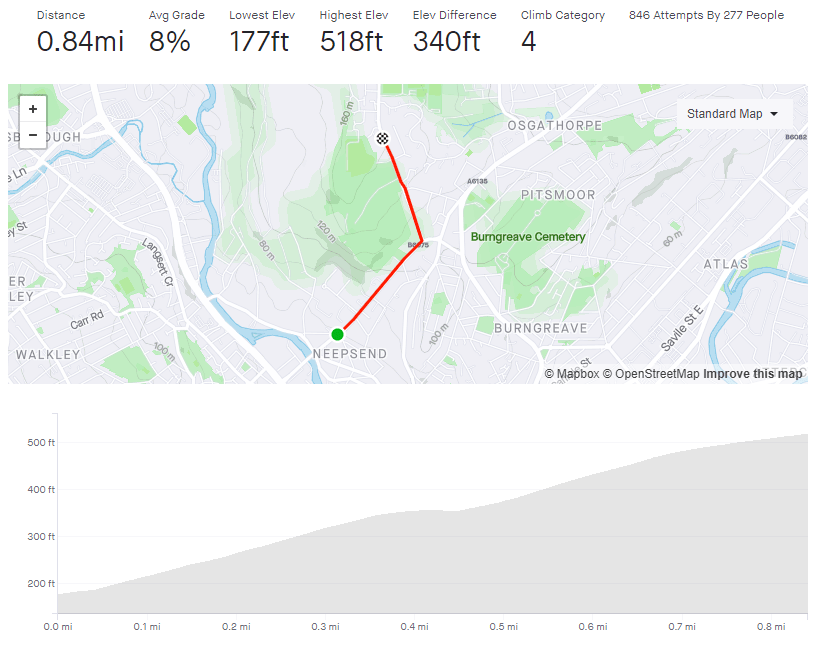
Rutland and Cooks Wood Roads

  • Rutland and Cooks Wood Roads
  • Length: 0.84 miles
  • Avg gradient: 7.7%   Peak gradient: 12.1%
  • Difficulty: 3/5
  • Likelihood of encountering unpleasant motor-vehicles: 5/5
  • Elevation gain: 340ft
  • Strava 

Pre-bike, I often used to commute this way, so Rutland Road was one of my earliest introductions to what Sheffield hills are like – even though I was in the car. As a consequence, this hill had a slightly foreboding reputation (in my head at least) and it was a while before I tackled it. When I finally did, and managed to beat it, it felt like a real achievement. However, it was a long time until I added Cooks Wood Road on the end.

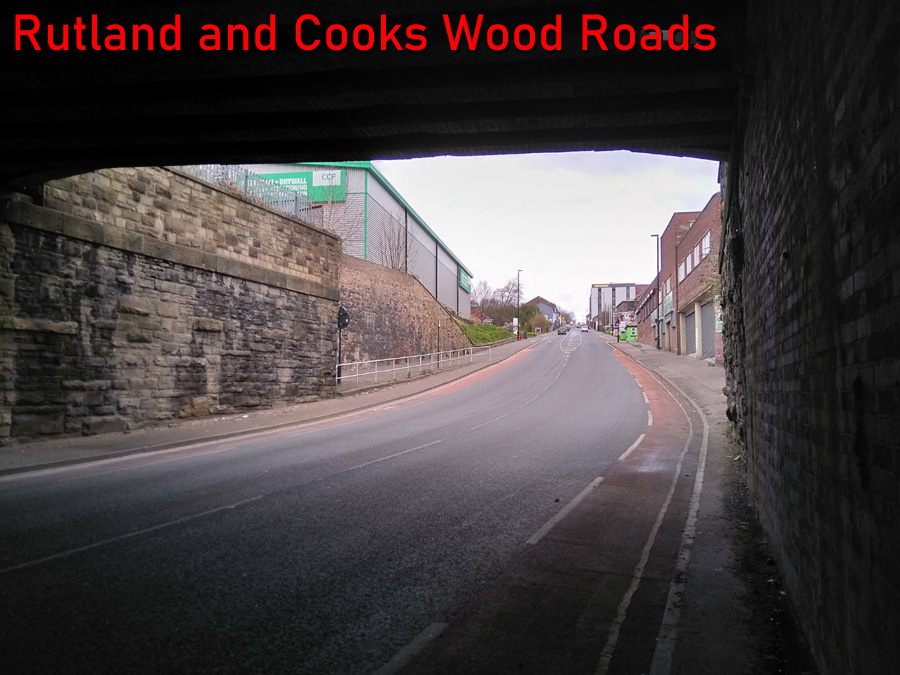
Starting under the railway bridge, the road stretches far up ahead of you, although you’ll probably not be able to see it for all the cars. This is not a quiet climb and you will get some form of aggressive motor vehicle pass you. The photos here were all taken at the start of the COVID-19 lockdown and I still got close-passed. You won’t ever see the road it as quiet at this otherwise.

For the first third, it’s a fairly steady 9-10%, with not much to look at except a large variety of industrial units, so just head down and try not to get hit by a grumpy motorist. As you reach Parkwood Springs and the Sea Cadet Corps, on your right, the road flattens for a short run to the traffic lights.

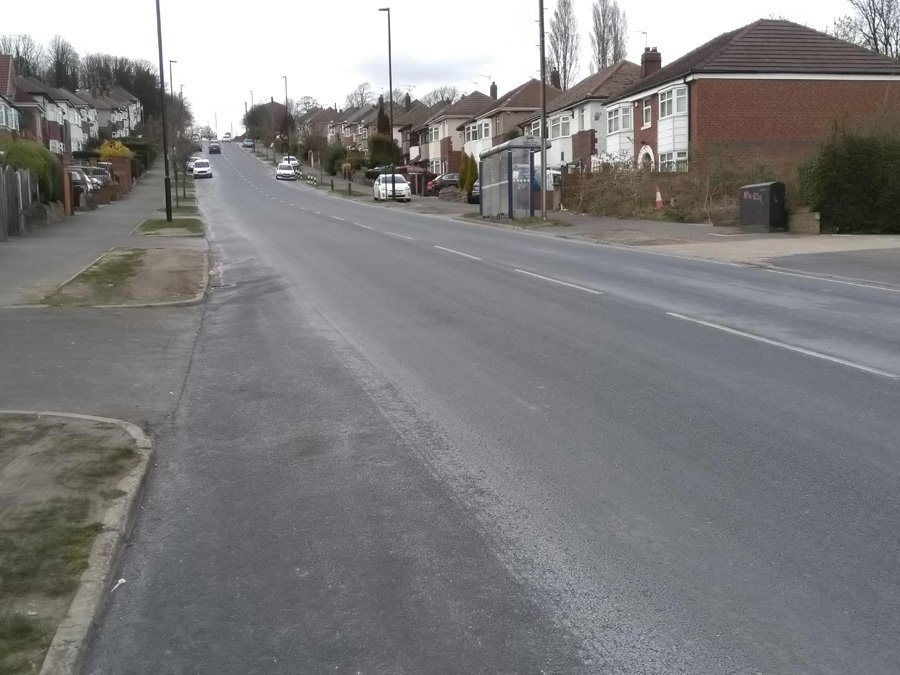
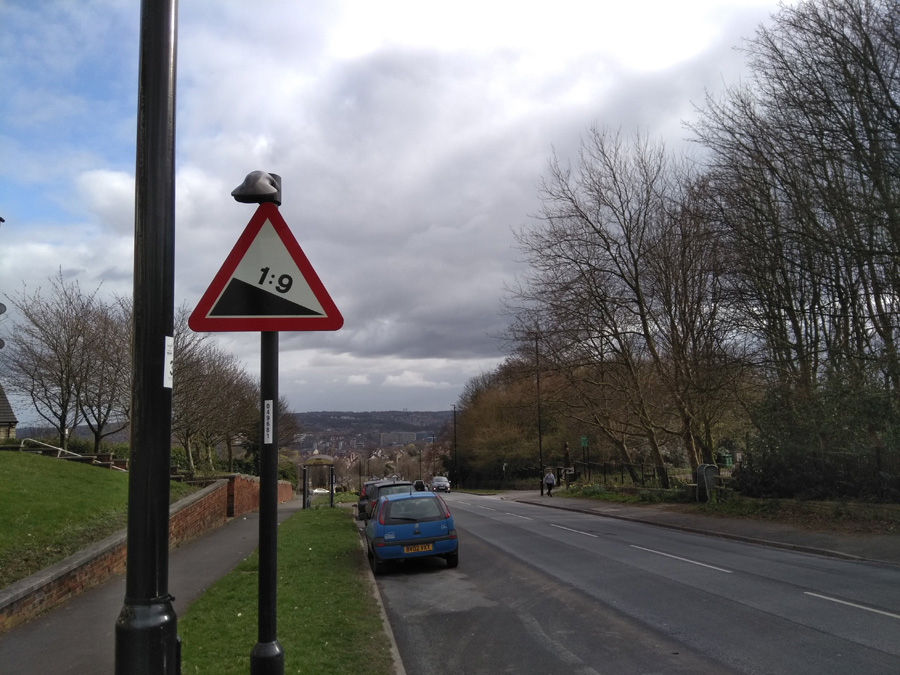
If you’re lucky, you’ll get a red and can have a legitimate breather before taking the left turn onto Cooks Wood Road. You’re straight into the climb again and although it never gets more than 2% steeper than Rutland, Cooks Wood Road feels a lot more challenging. There’s no obvious landmarks but near the bus stop, the road ramps up and you’ll need to drop into that lower gear for another 0.1 mile, until you pass the entrance for Parkwood Springs on your left (an old style 1:9 gradient sign still remains on the other side of the road). The Strava segment continues for another 350 yards or so but once you’re here, you’ve done the heavy lifting.

Hopefully you made it up in one piece and, if you fancy a change of tempo, you could always ride the Parkwood Springs MTB track back downhill.

Douse Croft Lane to the valley top

  • Douse Croft Lane to the valley top
  • Length: 1.12 miles
  • Avg gradient: 6%   Peak gradient: 14%
  • Difficulty: 3/5
  • Likelihood of encountering unpleasant motor-vehicles: 1/5
  • Elevation gain: 377 ft 
  • Strava

Situated out in the lovely Mayfield Valley, this hill is snuggled out amongst a wealth of winding country hills. It’s an area well worth exploring and never too far from civilisation.

You’ll approach this climb from either Brown Hills Lane or Harrison Lane, both of which send you down Gorse Lane. It’s quite a speedy drop with a sharp, blind bend just before you hit the climb. For safety’s sake you’ll need to pull on the brakes which unfortunately will cost you some momentum for the start of the climb.

One of the consolations of this hill is that the toughest parts are out of the way first, including the immediate sharp bend to the right at 14%. Once you’re around that, you can see the next bend approaching but the gradient only drops a few points here, and surprisingly, shows up as less steep around the switchback. It certainly doesn’t feel easier.

Wiggle your way up, as the Mayfield Valley opens up on your left, and around the next right hand bend, with the gradient remaining in the low double figures as you pass Harrop Lane on the left. You’ve now got a steady 6-7% climb for about 0.3 miles, returning to double figures as you approach the cottage and the junction to Fulwood Lane, where you turn right.

The hard bit is done now but it’s worth carrying on. The road floats around the low single figures and only once briefly touches 6% (it’s this section that has reduced the average gradient of the segment) but the views over the valley towards Sheffield are lovely. Once you’re reached the top you’ll be greeted with one of my favourite vistas of Sheffield.

Jenkin Road

  • Jenkin Road
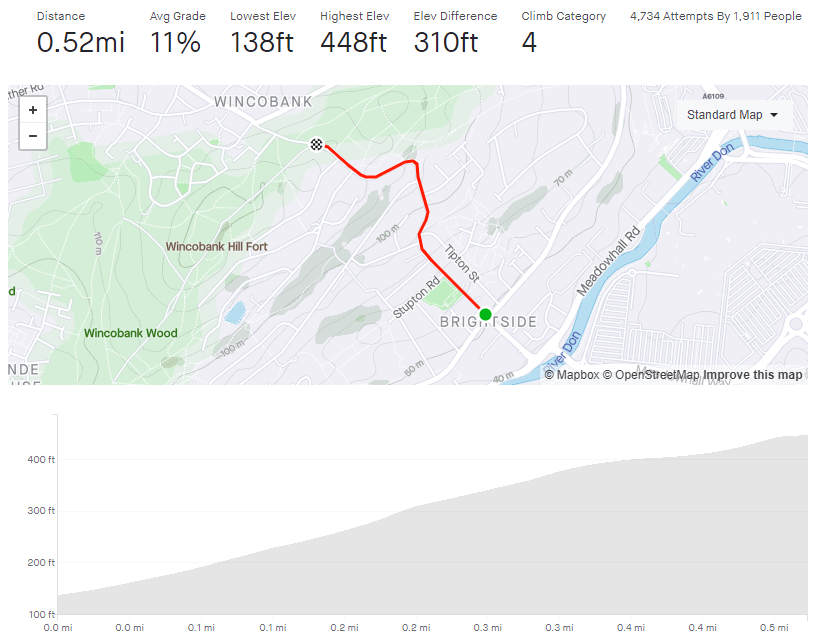
  • Length: 0.52 miles
  • Avg gradient: 11%
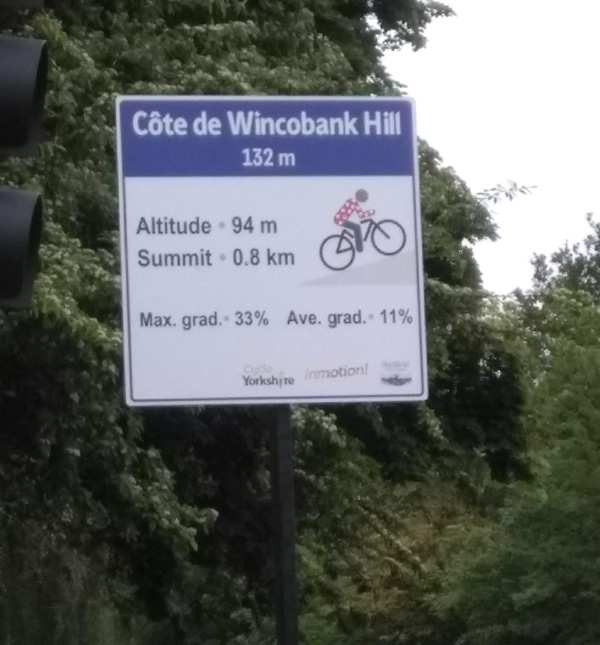
  • Peak gradient: 17.2% (the sign at the bottom says 33% but I don’t believe that)
  • Difficulty: 4/5
  • Likelihood of encountering unpleasant motor-vehicles: 3/5
  • Elevation gain: 310 ft
  • Strava

Something special for the 25th hill on sheffieldcyclingclimbs.com.

Many of Sheffield’s hills are fairly anonymous, some have a little local notoriety and some have enough of a reputation to feature in the Tour de France. Jenkin Road (or the Côte de Wincobank Hill as it was renamed for The Grande Départ in 2014) is one of those hills.

As a result of its reputation, I’d been putting off attempting this climb for some time but finally relented during lockdown, figuring that I’d be delaying fewer cars as I plodded upwards. The fact that I do every climb at least twice (once to do the climb and a second time to take photos) just added to the trepidation.

Starting from the junction with Holywell Road, you’re already at a disadvantage, having had to stop at the crossroads and therefore beginning from a standing start. It’s here that the sign, commemorating Jenkin Road’s role in the 2014 Tour, is placed. It states that the average gradient is a perfectly acceptable 11% but the maximum gradient is a formidable 33%. I think that’s an exaggeration and Strava and Veloviewer both agree, putting the peak gradient closer to 16.8%. Jenkin Road’s steepest segment is slightly wiggly, so maybe in a straight line it’s closer to 33%.

The hill begins at a fairly standard 10% as it stretches ahead of of you. With houses, playing fields and a church, there’s not much yet to mark this climb as distinct from the likes of Mertyle Road but, just after you pass the church, the road curves to the right, the gradient ramps up and, ahead of you, you can see why the hill made it into the Tour.

The road turns into a little S-bend here and the gradient hits 17.2% as it wiggles back and forth. Do your best here and don’t worry too much about any vehicles behind you, they’re as likely struggling up as much as you. As the hill relents a bit, down to about 12% as you pass Ridge View Road on your right, take a moment to regain a bit of strength (and have a look at the view behind you if you can) because you only about half way there.

You’ll shortly reach a sweeping switchback, which starts easily enough but its a bit deceptive and you’ll notice the extra couple of percentage points on the gradient here. However, once you’re round the bend with Wincobank Common on your right, it’s the home stretch, even dropping down to a meagre 4.5% around the next corner. Once you’ve done that, you can see the final 9.5% hump approaching and shortly you’ll be at the top.  Well done.

You can see the pros on the 2014 Tour, climbing up the wiggly bit, below.

Now go and put on your yellow jersey and pretend you’ve just won the Tour De France.